John Maiben Gilmartin Award 2025 jointly awarded to Dr Dierdre Cullen and Dr Siobhan Osgood
14.05.2026
Posted by IGS
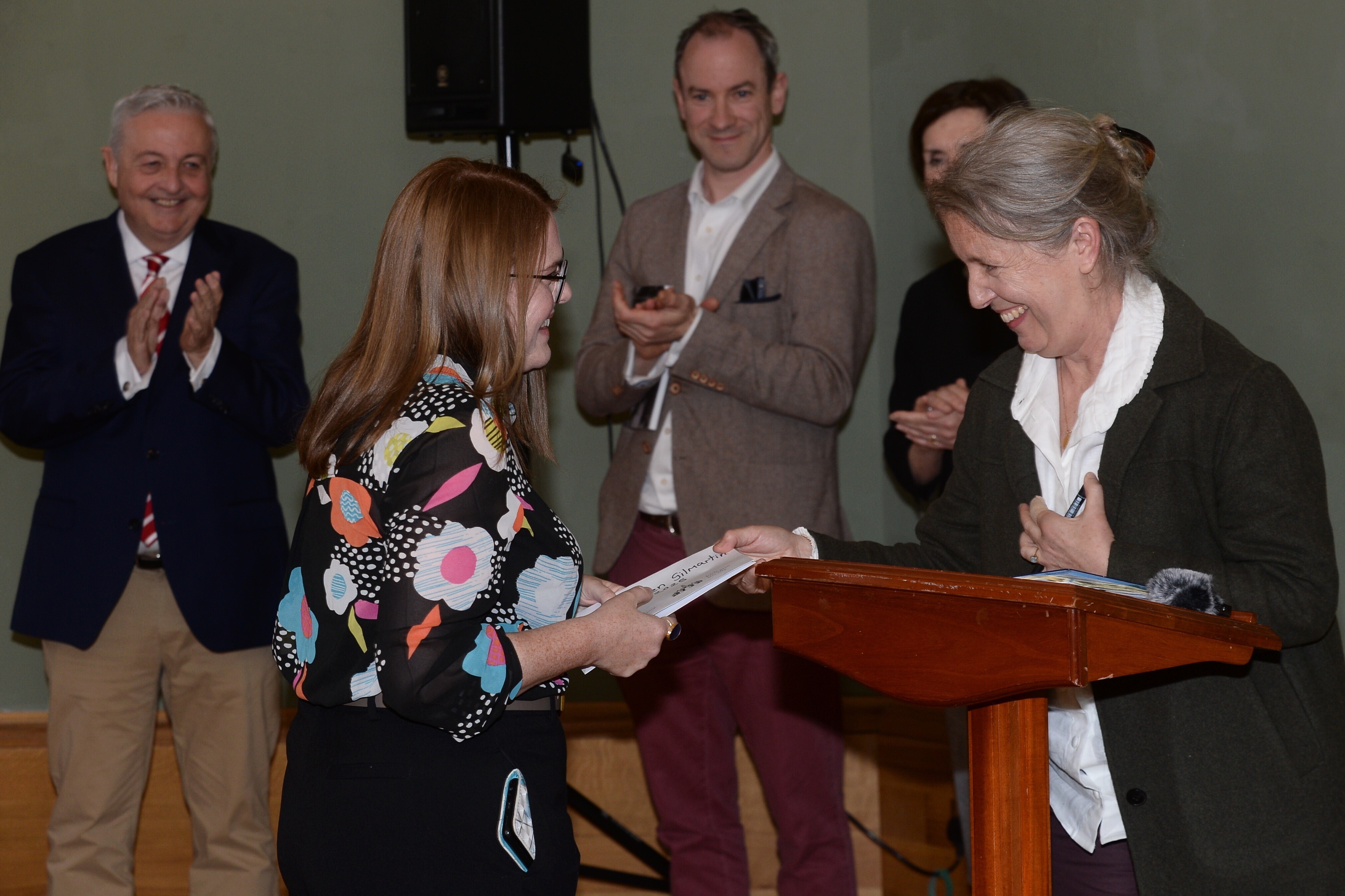
The Irish Georgian Society’s John Maiben Gilmartin Award 2025 was jointly awarded to Dr Dierdre Cullen and Dr Siobhan Osgood with a presentation made last month in the City Assembly House by JM Gilmartin assessor, Professor Finola O’Kane.
The John Maiben Gilmartin Award assessors committee, comprising Dr Fintan Cullen, Dr Conor Lucey and Dr Finola O’Kane, considered the standard of applications in 2025 warranted a joint award. Read more below about the research of the joint-winners Dr Dierdre Cullen and Dr Siobhan Osgood, and the opportunities afforded by the award to pursue their respective archival research.
Dr Deirdre Cullen: Neoclassical sensibilities and the creation of the all’antica painted decorations in the Long Gallery, Castletown House, Co. Kildare.

The John Maiben Gilmartin Award will facilitate Dr Deirdre Cullen’s further research this summer into a key aspect of her recently completed PhD thesis, which examined the neoclassical sensibility behind the creation of the all’antica painted decorations in the Long Gallery of Castletown House, Co. Kildare. Commissioned during the tenure of Thomas and Lady Louisa Conolly, the scheme was executed by the English artist Charles Reuben Ryley in 1775 and 1776. Dr Cullen’s thesis argued that despite its superficial similarity to painted rooms by celebrated architects such as James Stuart, Robert Adam and James Wyatt, the Long Gallery stands apart in the sheer scale and complexity of its iconography, created largely under Louisa Conolly’s direction in an era when women did not typically receive a formal education in the classics. Dr Cullen examined a broad range of materials to shed light on the foundations of Louisa Conolly’s wide-ranging familiarity with the history, mythology, and literature of the classical world, looking at reading material, amateur theatricals, female ‘accomplishments’, Grand Tour correspondence and souvenirs, and the architecture and interiors that formed the backdrop to her life. The John Maiben Gilmartin award will permit Dr Cullen to delve deeper into Louisa’s education and family milieu by focusing on records of her parents, the 2nd Duke and Duchess of Richmond. Their papers in the West Sussex Record Office contain their personal correspondence, household accounts and receipts, and records of the servants in their employ. Dr Cullen expects that examination of these papers will yield new information concerning the family’s thoughts and practices in the upbringing and education of their daughters, before Louisa and her younger sisters moved to Carton, Co. Kildare, in 1751 (after the early deaths of the Duke and Duchess).
Dr Siobhan Osgood: Evolution of engineering draughtsmanship and the Ireland's influence over the creation of the French railway network
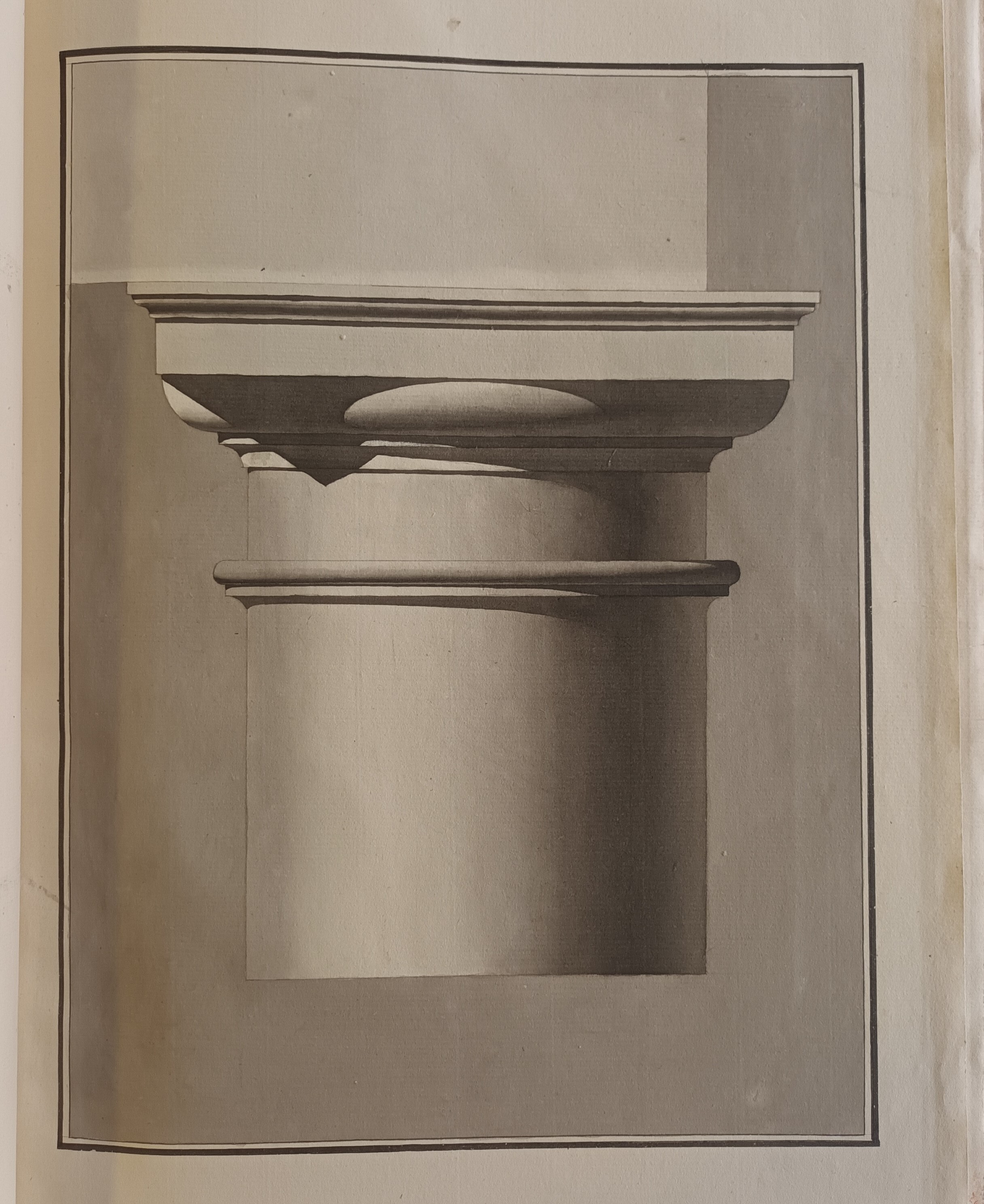
The John Maiben Gilmartin Award enabled Dr Siobhan Osgood to visit archives in Paris to expand two aspects of her research. Firstly, into the evolution of engineering draughtsmanship. The technical drawing skill of using shadow projection was a mathematical formula devised by the French military engineer and aide de camp to Napoleon, Gaspard Monge. He published Geometrie Descriptive in 1794 when he was a founding member of the École Polytechnique, and it is their archive which contains his own drawings, teaching syllabus, letters, and drawing portfolios of his students. The second prong of the archival research found original material relating directly to Ireland’s influence over the creation of the railway network in France: the French investigations into creating their own railway network were based on the Irish Railway Commission from 1838. The Archives Nationales and Bibliothèque Nationale contained artefacts from Baptiste Alexis Victor Legrand, Director General of the Department of Ponts et Chaussées who presented a plan to the French government based on the Irish Commissions strategy. One particular highlight from the visit was finding the large-scale model of the Boyne Viaduct, on display at the Musée des Arts et Métiers. It was gifted by the viaduct’s engineer, Sir John Banjamin Macneill, to Prince Napoleon in 1863. During Dr Osgood’s visit she was also able to visit railway stations, including the metro station Place Monge, whose name is also cast into the Eiffel Tower. The outcome will be the publishing of her thesis as a book with a robust evidence-based scrutiny of Franco-Irish railway relations, and the early innovations of Georgian railways in Ireland which led to the Victorian standardisations in railway building.