The vision of the Irish Georgian Society is to conserve, protect and foster a keen interest and a respect for Ireland’s architectural heritage and decorative arts. These aims are achieved through its scholarly and conservation education programmes, through its support of conservation projects and planning issues, and vitally, through its members and their activities.
Mary Nevin awarded the Desmond Guinness Scholarship 2025
20.05.2026
Posted by IGS
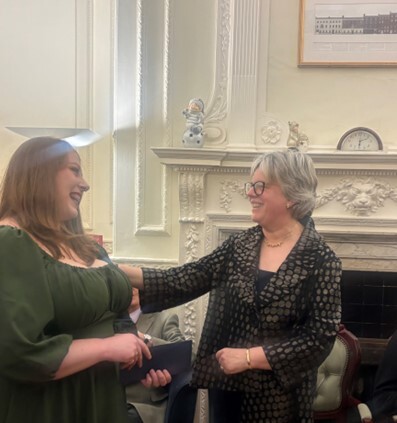
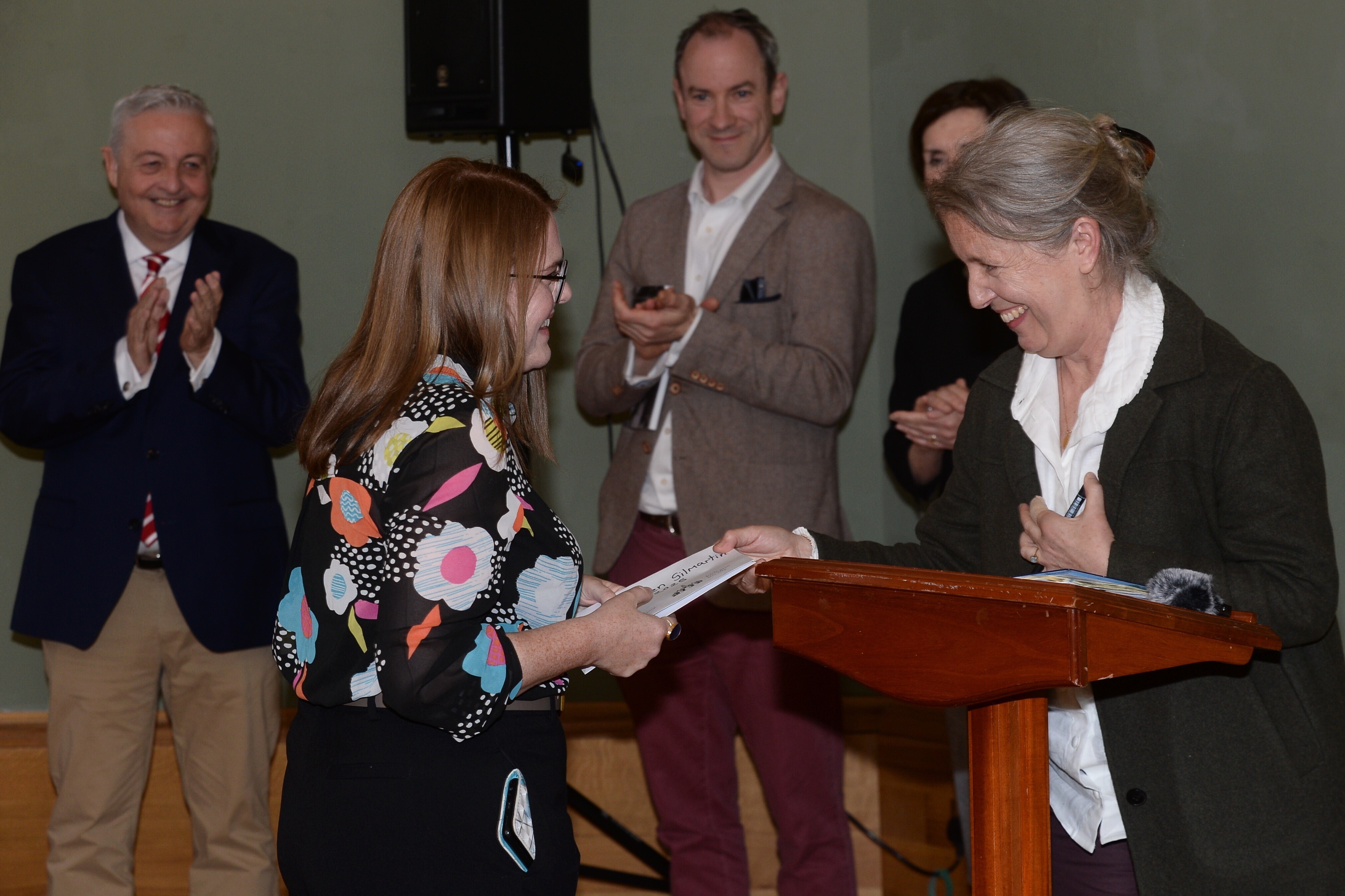
Mary Nevin recieving the Desmond Guinness Scholarship 2025 from DG Scholarship Assessor, Professor Kathleen James-Chakraborty
The Irish Georgian Society warmly congratulates Mary Nevin for winning the Desmond Guinness Scholarship 2025, which will enable her to progress her research into the Eighteenth-Century chimneypiece industry in Britain and Ireland
The Desmond Guinness Scholarship will facilitate Mary Nevin’s PhD research on the European Research Council Advanced Grant project, STONE-WORK, at Trinity College Dublin. Her study, supervised by Prof. Christine Casey and Dr. Melanie Hayes, examines the eighteenth-century chimneypiece industry in Britain and Ireland. Often constituting the single most expensive unit of architectural and sculpted display in elite interiors, the chimneypiece has generated a conspicuously small historiography. Mary’s research seeks to redress this lacuna by examining material supply networks, authorship, and the role of the artisan, to reconstruct the collaborative and material processes involved in chimneypiece production.
The Desmond Guinness Scholarship will enable Mary to consult archival material at Suffolk Archives, the University of Bristol Library, the British Library, and the Public Record Office of Northern Ireland. Business records relating to regional stone-working enterprises in eastern England will provide data on commercial practices, extending Mary’s existing analysis of the trade in decorative stone and yielding comparative information regarding commercialisation in the chimneypiece industry. Material associated with the Paty family of Bristol will extend the project’s evidentiary basis for sculptor specialisations, while also providing information pertaining to design and marketability. Family and estate papers connected to the Perceval family of Cork will contribute to knowledge of artisanal networks that underpinned chimneypiece production in the early eighteenth century.
Mary expects that examination of these varied sources will illuminate the breadth and regional diversity of the eighteenth-century chimneypiece industry, advancing understandings of elite acquisition, mercantile networks, and the chimneypiece as a vehicle for emulative self-fashioning in the domestic environment.
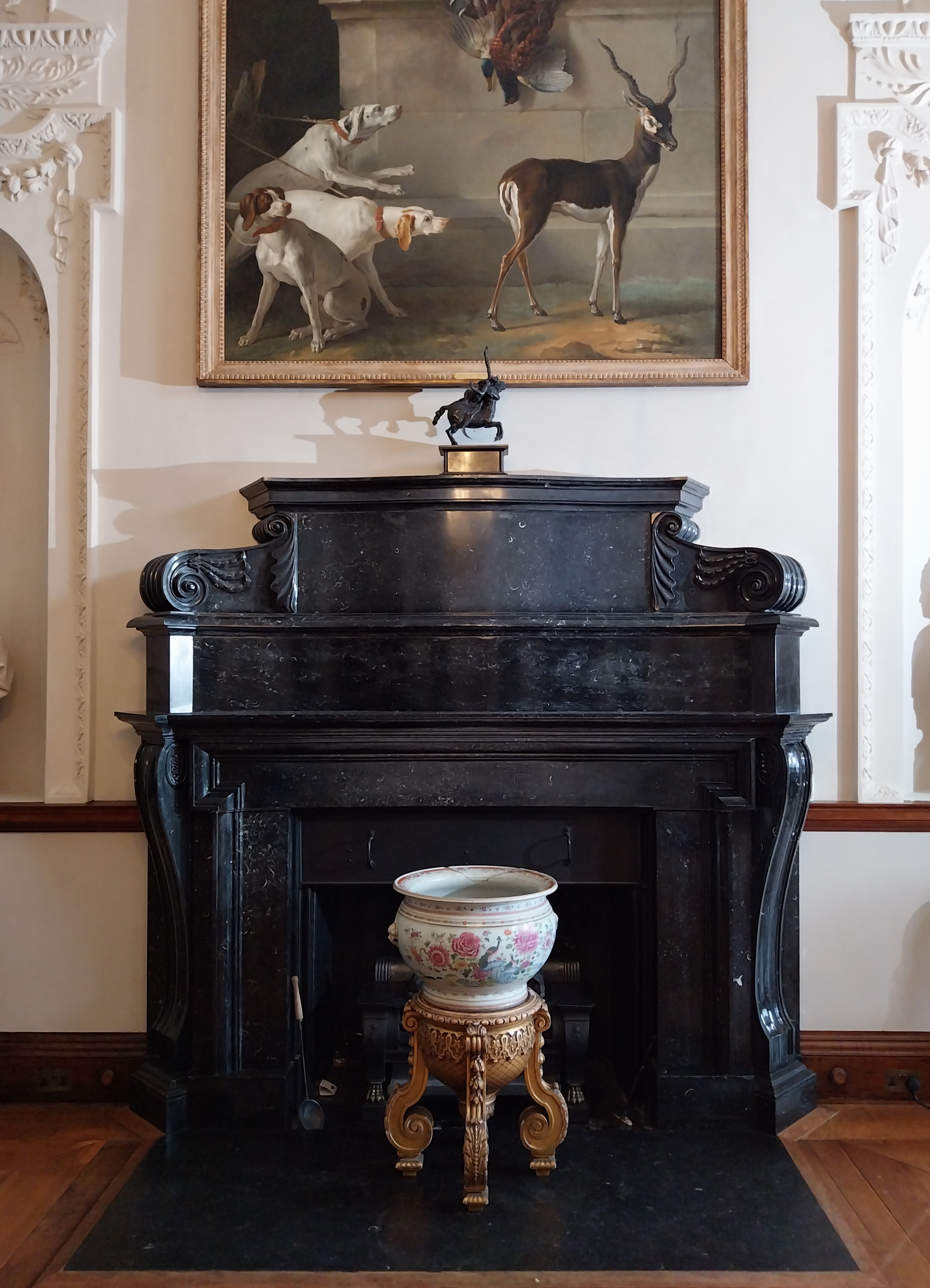
Kilkenny Marble chimneypiece 1740s, entrance hall to Russborough House, Co. Wicklow. Photo courtesy STONE-WORK, courtesy of the Alfred Beit Foundation
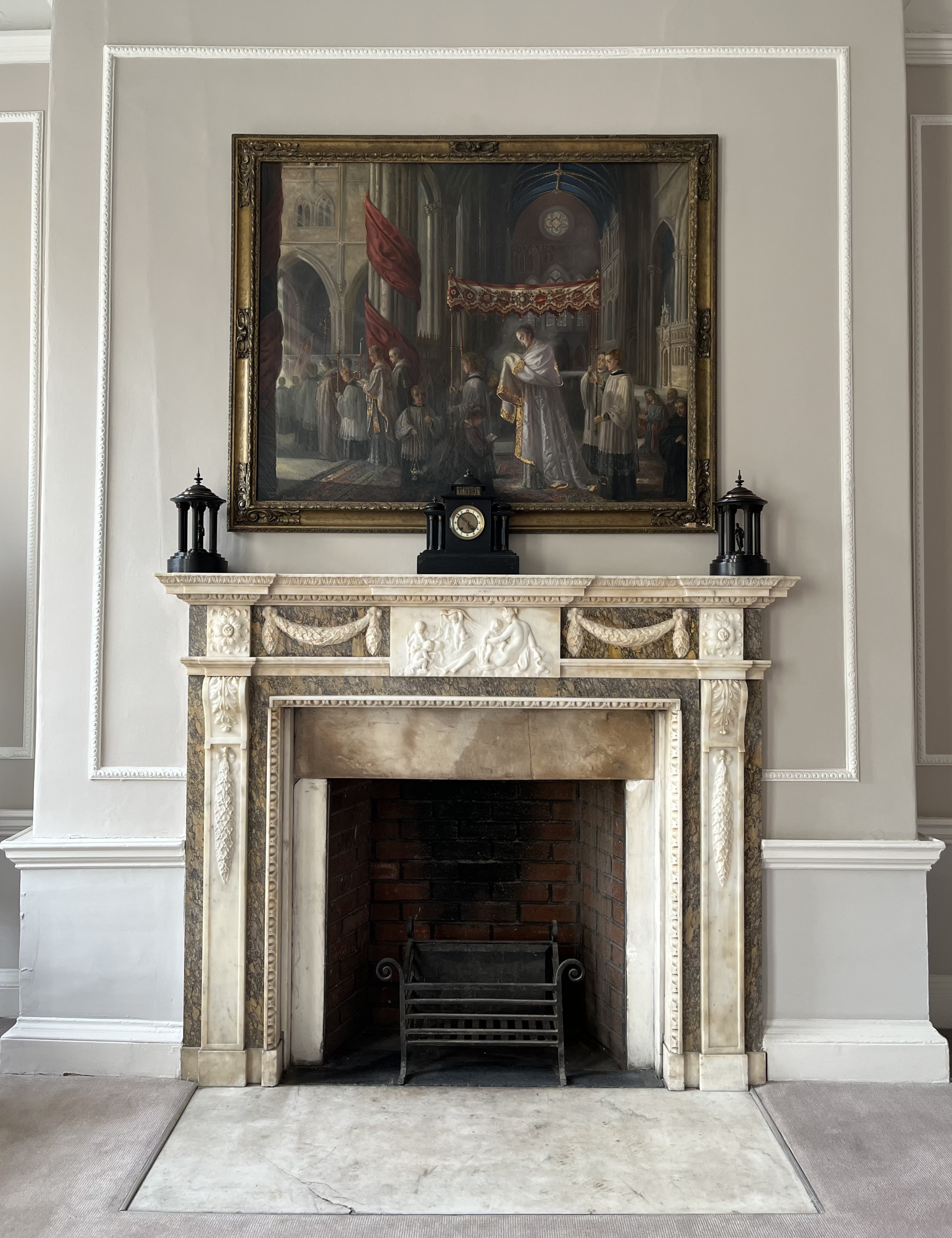
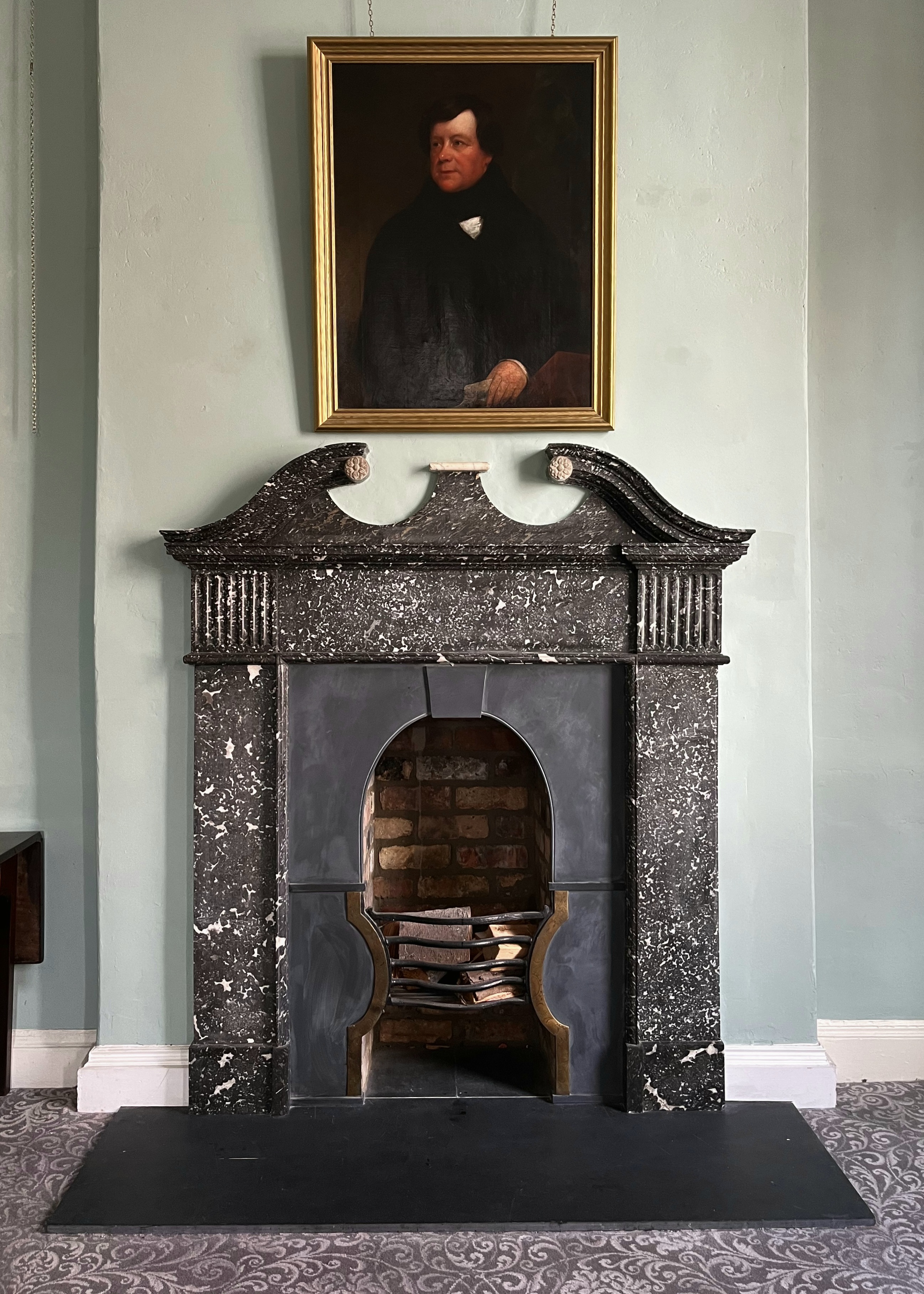
Brocatello di Siena and Carrara Marble chimneypiece c. 1770, first-floor rear drawing room of Ely House, Co. Dublin. Photo STONE-WORK, courtesy of the Knights of ColumbanusMitchelstown Limestone chimneypiece c. 1770s, first-floor front drawing room of the CAH, Co. Dublin originally from entrance hall to Bowens Court, Co. Cork,
John Maiben Gilmartin Award 2025 jointly awarded to Dr Deirdre Cullen and Dr Siobhan Osgood
14.05.2026
Posted by IGS
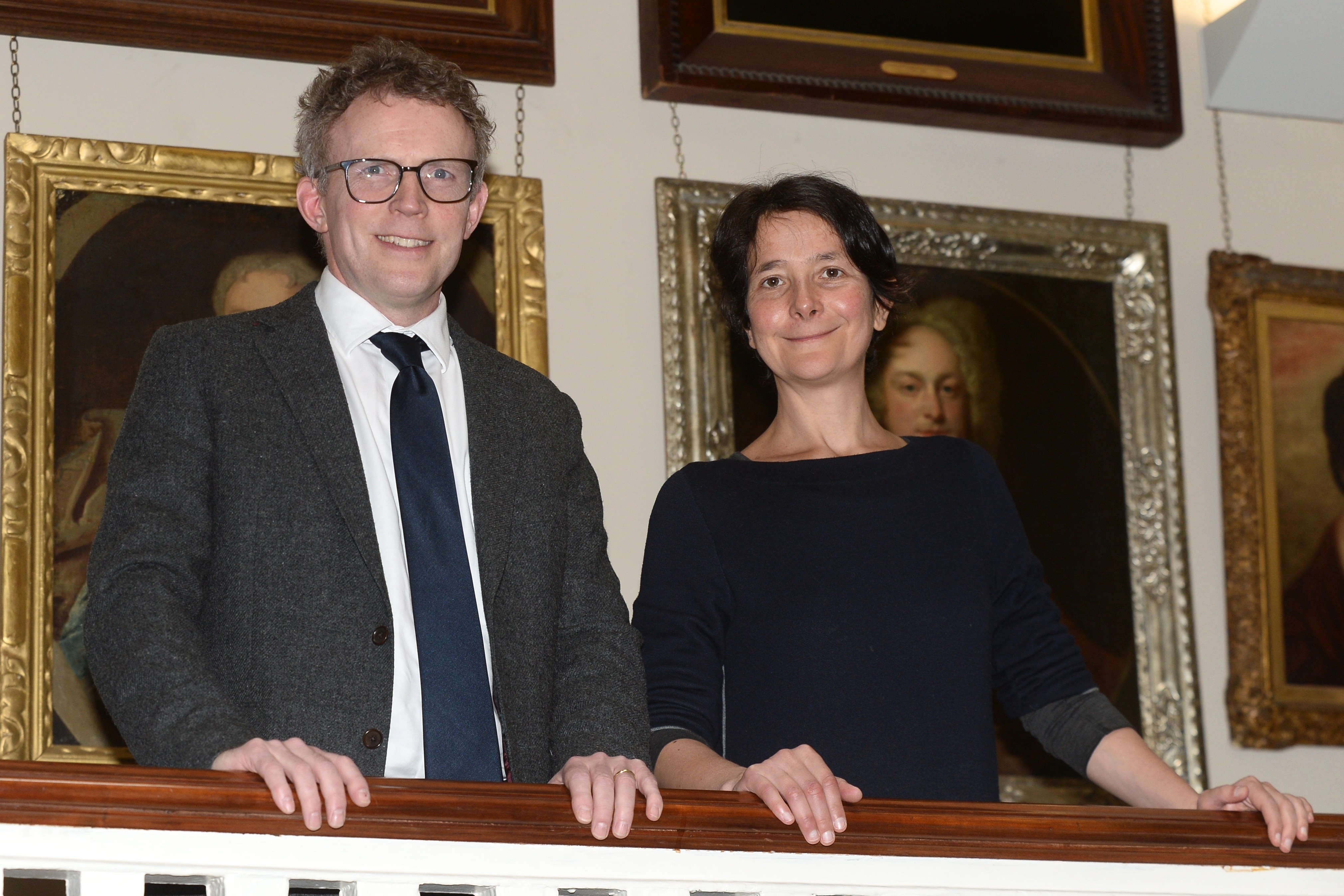
Professor O'Kane presenting the JM Gilmartin award 2025 to joint winner Dr Siobhan Osgood at the launch of IADS in the City Assembly House Friday 24th April 2026
The Irish Georgian Society’s John Maiben Gilmartin Award 2025 was jointly awarded to Dr Deirdre Cullen and Dr Siobhan Osgood with a presentation made last month in the City Assembly House by JM Gilmartin assessor, Professor Finola O’Kane.
The John Maiben Gilmartin Award assessors committee, comprising Dr Fintan Cullen, Dr Conor Lucey and Dr Finola O’Kane, considered the standard of applications in 2025 warranted a joint award. Read more below about the research of the joint-winners Dr Deirdre Cullen and Dr Siobhan Osgood, and the opportunities afforded by the award to pursue their respective archival research.
Dr Deirdre Cullen: Neoclassical sensibilities and the creation of the all’antica painted decorations in the Long Gallery, Castletown House, Co. Kildare.

The John Maiben Gilmartin Award will facilitate Dr Deirdre Cullen’s further research this summer into a key aspect of her recently completed PhD thesis, which examined the neoclassical sensibility behind the creation of the all’antica painted decorations in the Long Gallery of Castletown House, Co. Kildare. Commissioned during the tenure of Thomas and Lady Louisa Conolly, the scheme was executed by the English artist Charles Reuben Ryley in 1775 and 1776. Dr Cullen’s thesis argued that despite its superficial similarity to painted rooms by celebrated architects such as James Stuart, Robert Adam and James Wyatt, the Long Gallery stands apart in the sheer scale and complexity of its iconography, created largely under Louisa Conolly’s direction in an era when women did not typically receive a formal education in the classics. Dr Cullen examined a broad range of materials to shed light on the foundations of Louisa Conolly’s wide-ranging familiarity with the history, mythology, and literature of the classical world, looking at reading material, amateur theatricals, female ‘accomplishments’, Grand Tour correspondence and souvenirs, and the architecture and interiors that formed the backdrop to her life. The John Maiben Gilmartin award will permit Dr Cullen to delve deeper into Louisa’s education and family milieu by focusing on records of her parents, the 2nd Duke and Duchess of Richmond. Their papers in the West Sussex Record Office contain their personal correspondence, household accounts and receipts, and records of the servants in their employ. Dr Cullen expects that examination of these papers will yield new information concerning the family’s thoughts and practices in the upbringing and education of their daughters, before Louisa and her younger sisters moved to Carton, Co. Kildare, in 1751 (after the early deaths of the Duke and Duchess).
The Long Gallery, Castletown, Co. Kildare. Stephen Catterson Smith the Elder, Lady Louisa Conolly (after Joshua Reynolds, c. 1775). Courtesy of the Castletown Foundation and the Office of Public Works, photography by Davison Associates.
Dr Siobhan Osgood: Evolution of engineering draughtsmanship and the Ireland's influence over the creation of the French railway network
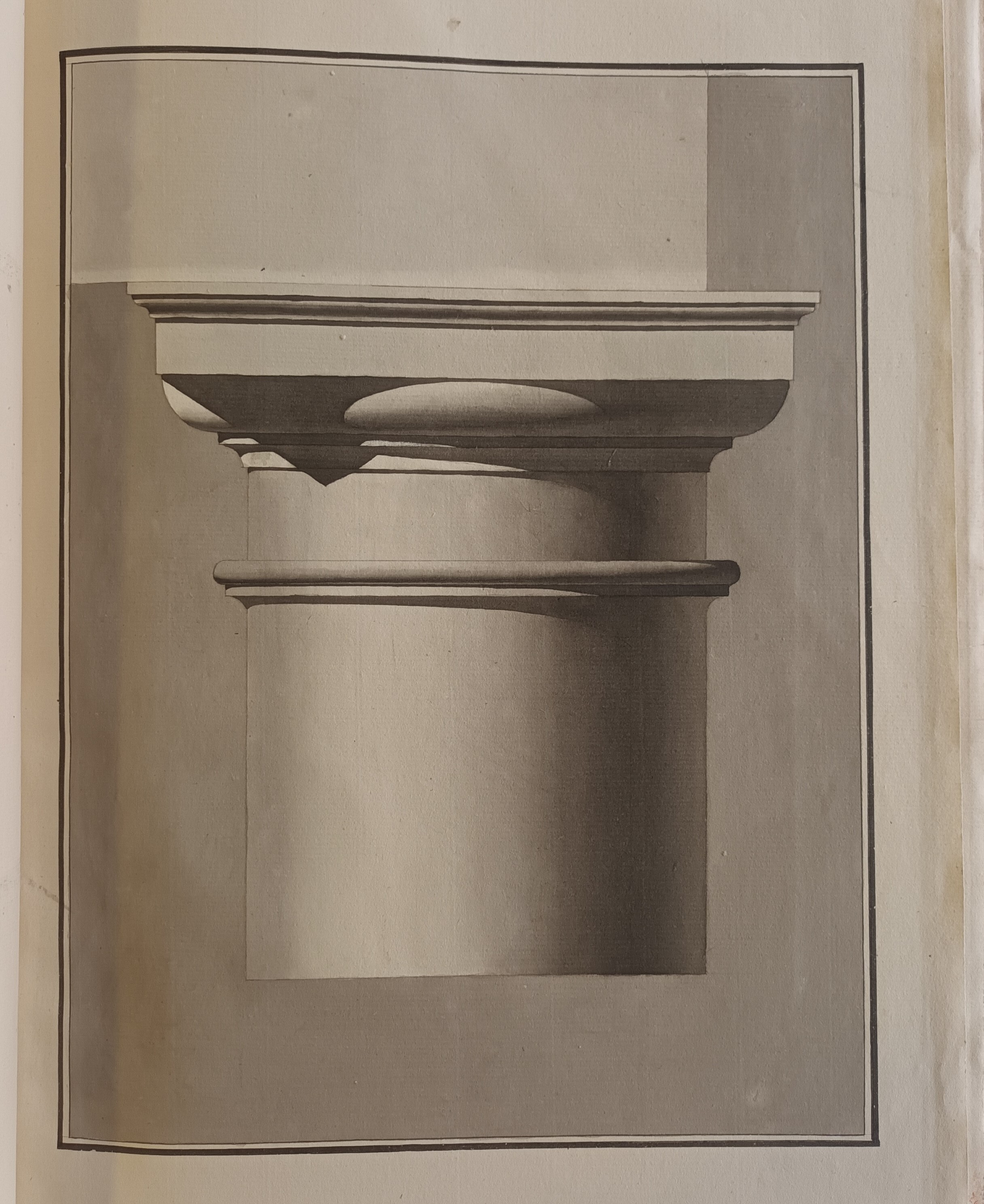
The John Maiben Gilmartin Award enabled Dr Siobhan Osgood to visit archives in Paris to expand two aspects of her research. Firstly, into the evolution of engineering draughtsmanship. The technical drawing skill of using shadow projection was a mathematical formula devised by the French military engineer and aide de camp to Napoleon, Gaspard Monge. He published Geometrie Descriptive in 1794 when he was a founding member of the École Polytechnique, and it is their archive which contains his own drawings, teaching syllabus, letters, and drawing portfolios of his students. The second prong of the archival research found original material relating directly to Ireland’s influence over the creation of the railway network in France: the French investigations into creating their own railway network were based on the Irish Railway Commission from 1838. The Archives Nationales and Bibliothèque Nationale contained artefacts from Baptiste Alexis Victor Legrand, Director General of the Department of Ponts et Chaussées who presented a plan to the French government based on the Irish Commissions strategy. One particular highlight from the visit was finding the large-scale model of the Boyne Viaduct, on display at the Musée des Arts et Métiers. It was gifted by the viaduct’s engineer, Sir John Banjamin Macneill, to Prince Napoleon in 1863. During Dr Osgood’s visit she was also able to visit railway stations, including the metro station Place Monge, whose name is also cast into the Eiffel Tower. The outcome will be the publishing of her thesis as a book with a robust evidence-based scrutiny of Franco-Irish railway relations, and the early innovations of Georgian railways in Ireland which led to the Victorian standardisations in railway building.
Drawing of Tuscan capital by student, H. F. Wartille, 1828, showing technical skill in descriptive geometry, colour washes, shadow projection, and scale. Ecole Polytechnique archives, Monge, Gaspard, Cotes BCX: IX GM
Richard (‘Alec’) Alexander Charles Cobbe, CVO d. 31 March 2026
05.04.2026
Posted by IGS
It is with great sadness that the Irish Georgian Society has learned of the death of Alec Cobbe, artist, designer, musician and collector. Truly a renaissance man, Alec studied medicine at Oxford and the London Hospital in Whitechapel. Then he retrained as a painting conservator at the Tate Gallery, later working at the Hamilton Kerr Institute and Birmingham Museum & Art Gallery. His technical knowledge of pigment, and his skilful reading of X-rays (an unexpected synergy from his medical training) allowed for numerous rediscoveries, with particular expertise developed in the art of Tiziano Vecellio, known as Titian. Alec was also a successful artist himself, exhibiting widely and was deeply versed in the historic country house interior, working from the 1980s on some of the greatest English houses, including Petworth, Goodwood and Windsor Castle and Irish houses including Castle Coole, Castletown Cox, Castletown House, Dublin Castle, Emo Court, Hillsborough Castle and Russborough. His recently unveiled rehang of Castle Howard has been universally hailed as a triumph. In 2014 a book of a London and Dublin exhibition marked Alec’s donation of his design archive to the Victoria and Albert Museum.
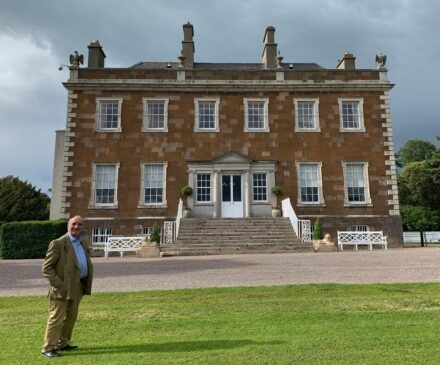
The Cobbe family owed its fortunes in Ireland to the successful career of Charles Cobbe, who rose through the ranks of the established church to become Archbishop of Dublin. Newbridge, County Dublin – the house built to designs by James Gibbs – remains the family home (though ownership has passed to the local authority. It has been, Alec recalled, ‘the single greatest influence on my life’. The designs by Gibbs for Newbridge were rediscovered by Alec and published with Terry Friedman in ‘James Gibbs in Ireland’ (2006), a volume published in association with the I.G.S.
Recent major projects associated with the house’s architecture and collections included the cataloguing in a wonderful book published by Yale University Press of the Cobbe Cabinet of Curiosities (2014), which had been accumulated there since the eighteenth century. An extraordinary exhibition organised with the O.P.W. at Dublin Castle reunited the ‘peacock’ dinner service. Commissioned from the newly founded Worcester porcelain factory by the archbishop’s daughter-in-law (and Alec’s great x5 grandmother) Lady Betty Cobbe, but sold from Newbridge in 1920, it was acquired back by Alec over decades, piece by piece. His award-winning book, ‘Birds, Bugs and Butterflies: A Biography of an Irish Service of Worcester Porcelain’ was published in 2019.
Earlier the historic picture collection formed by Lady Betty and her husband, Thomas (with the advice of Swift’s friend, the vicar of Donabate, Matthew Pilkington) was the subject of a major exhibition in 2001, together with Alec’s own, always judicious, additions to the collection. Clerics and Connoisseurs at Kenwood House was again supported by the I.G.S. in association with English Heritage.
In addition to his art and design practice, Alec was a talented musician and a leading collector of historic keyboard instruments, chiefly with associations to the great composers, but also charting the development of instrument building in Britain and Ireland. The collection is housed at the Cobbes’ English home, Hatchlands Park in Surrey (leased from the National Trust) where it complements spectacularly the interiors by Robert Adam restored and augmented by Alec over the past forty years.
Alec was a supporter of the I.G.S. for many years, contributing a typically erudite article to our journal on Ferdinand Weber, who had travelled from Saxony to Dublin to work as harpsichord maker for Dublin’s elite, including Lady Betty Cobbe. In 2016 he hosted an I.G.S. conference at Newbridge, featuring a wide range of papers on the house’s architecture, landscape and collections, subjects which he had spent a lifetime researching. His humour, kindness and, perhaps particularly, his infectious enthusiasm will be greatly missed by an immensely wide and diverse circle of friends.
Alec Cobbe is survived by his wife Isabel, née Dillon, and their children, Frances, Tom with his wife Emmanuelle, Rose and Henry, and their grandchildren.
Bilateral Meeting Advances New European Bauhaus Collaboration in Ireland with Elena Montani, Head of New European Bauhaus Unit, Joint Research Centre, EU Commission.
02.04.2026
Posted by IGS
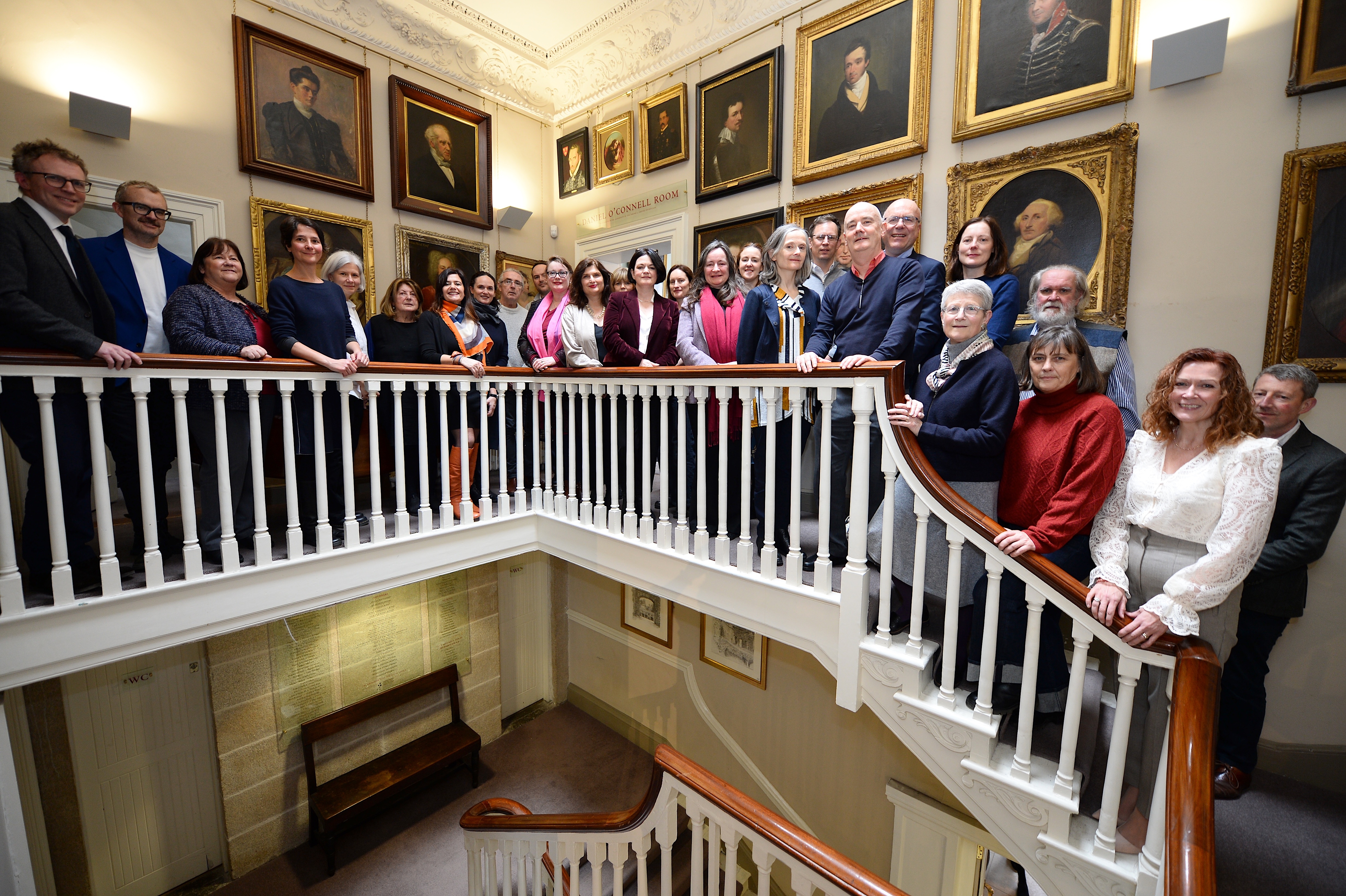
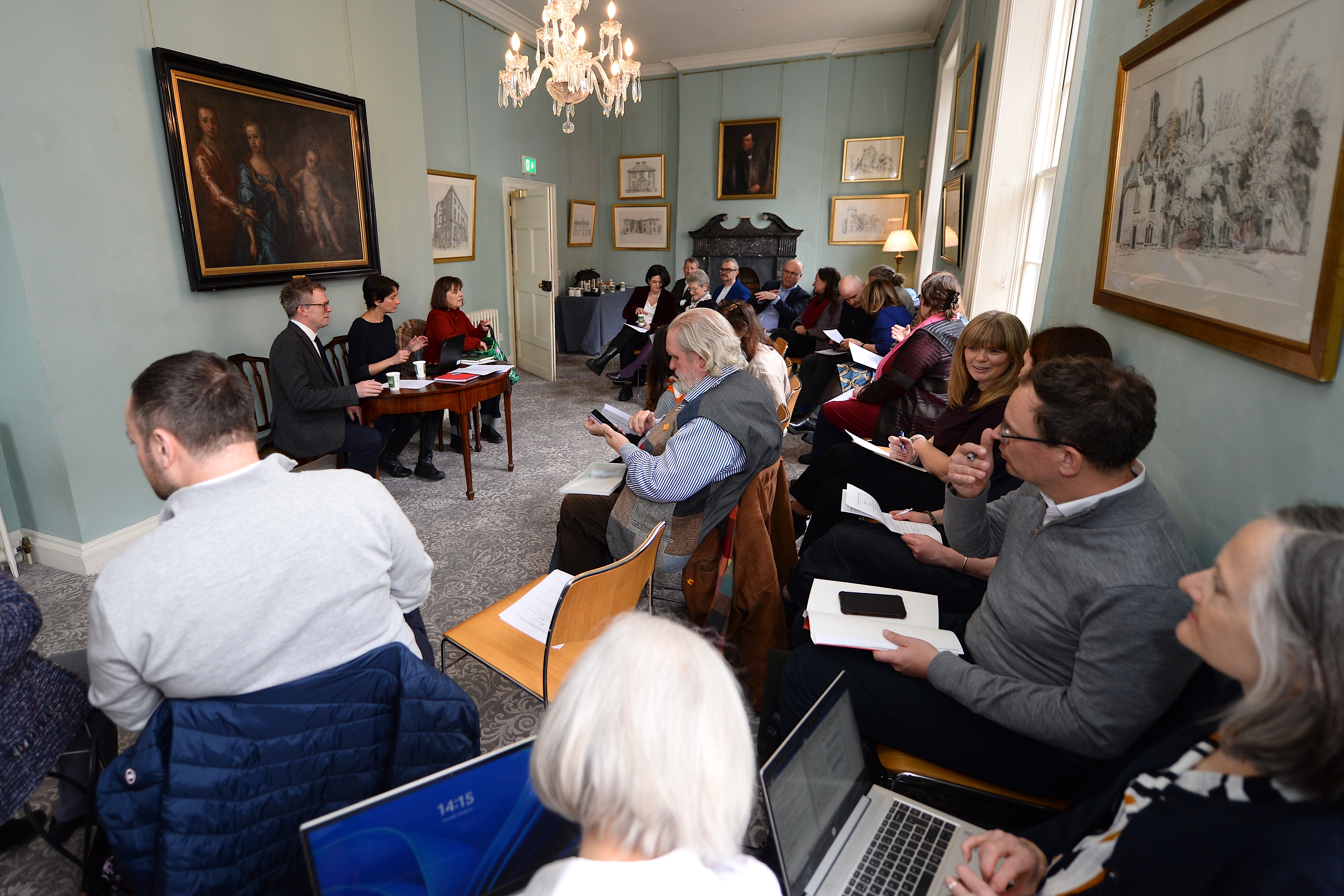
New European Bauhaus stakeholders meeting at City Assembly House Thursday 26th March 2026
Bilateral Meeting Advances New European Bauhaus Collaboration in Ireland
Dublin, Ireland — March 26, 2026 — A high-level bilateral meeting was held today at 58 William Street South, Dublin 2, bringing together key Irish stakeholders and European Commission representatives to discuss the ongoing development and implementation of the New European Bauhaus (NEB) initiative in Ireland.
The meeting welcomed Elena Montani, Head of the New European Bauhaus Unit at the Joint Research Centre of the European Commission. She was joined by Donough Cahill, Executive Director of the Irish Georgian Society, and Nicki Matthews, National Contact Point for the New European Bauhaus at the National Built Heritage Service, Department of Housing, Local Government and Heritage (DHLGH), alongside a range of national stakeholders engaged in NEB-related activity.
The session commenced with a formal welcome and introductions, followed by a roundtable discussion where participants outlined their involvement with the New European Bauhaus and shared perspectives on its impact and potential within Ireland.
A central focus of the meeting was an update from Elena Montani on the progress of the NEB across Europe and its future direction. The discussion highlighted the initiative’s ambition to connect sustainability, aesthetics, and inclusion in shaping Europe’s built environment and communities.
Irish stakeholders also presented on the implementation of NEB principles at a national level. Contributions from Nicki Matthews (policy) and Philip Cheasty (research and innovation) showcased key developments, including:
The EDAP/ECAP Programme and the forthcoming Adaptation & Reuse Conference 2026
The Dublin Declaration and its role in establishing a NEB Local Chapter Model
The ERDF THRIVE funding programme supporting sustainable development initiatives
The evolving NEB Facility and the dual role of the National Contact Point in policy and research & innovation
The meeting concluded with a shared commitment to strengthening collaboration between Ireland and the European Commission in advancing the New European Bauhaus vision.
A group photograph was taken to mark the occasion and acknowledge the continued partnership between European and Irish stakeholders.
New Life for Historic Buildings & Places conference recordings now available to watch
02.04.2026
Posted by IGS
European and Irish Experts Convened in Dublin’s Europe House to Advance Adaptive Reuse of Historic Buildings
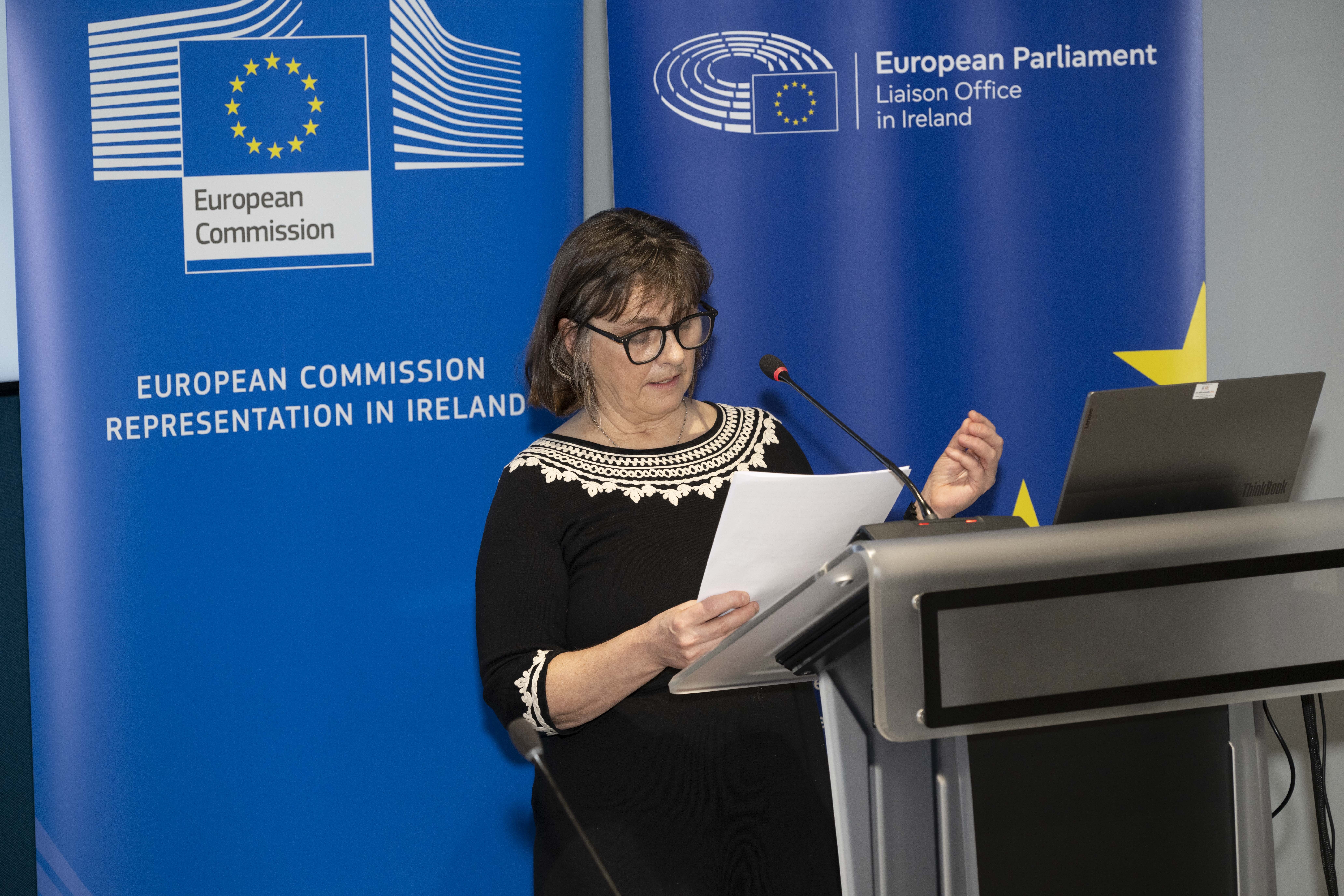
Fearghas O Beara Head of European Parliament Lisaison Office in Ireland launching adaptive resue conference at Europe House, Dublin, Ireland.
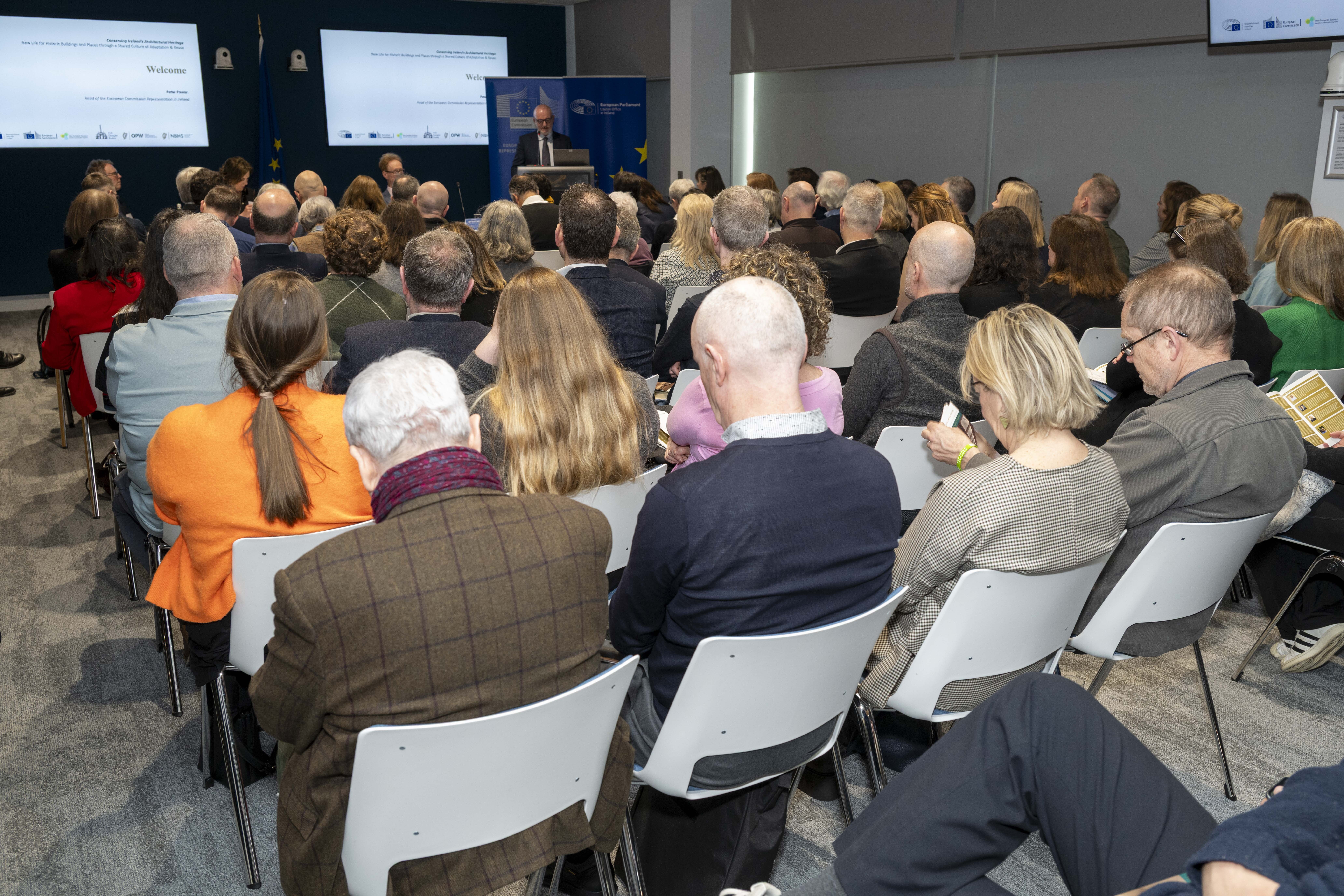
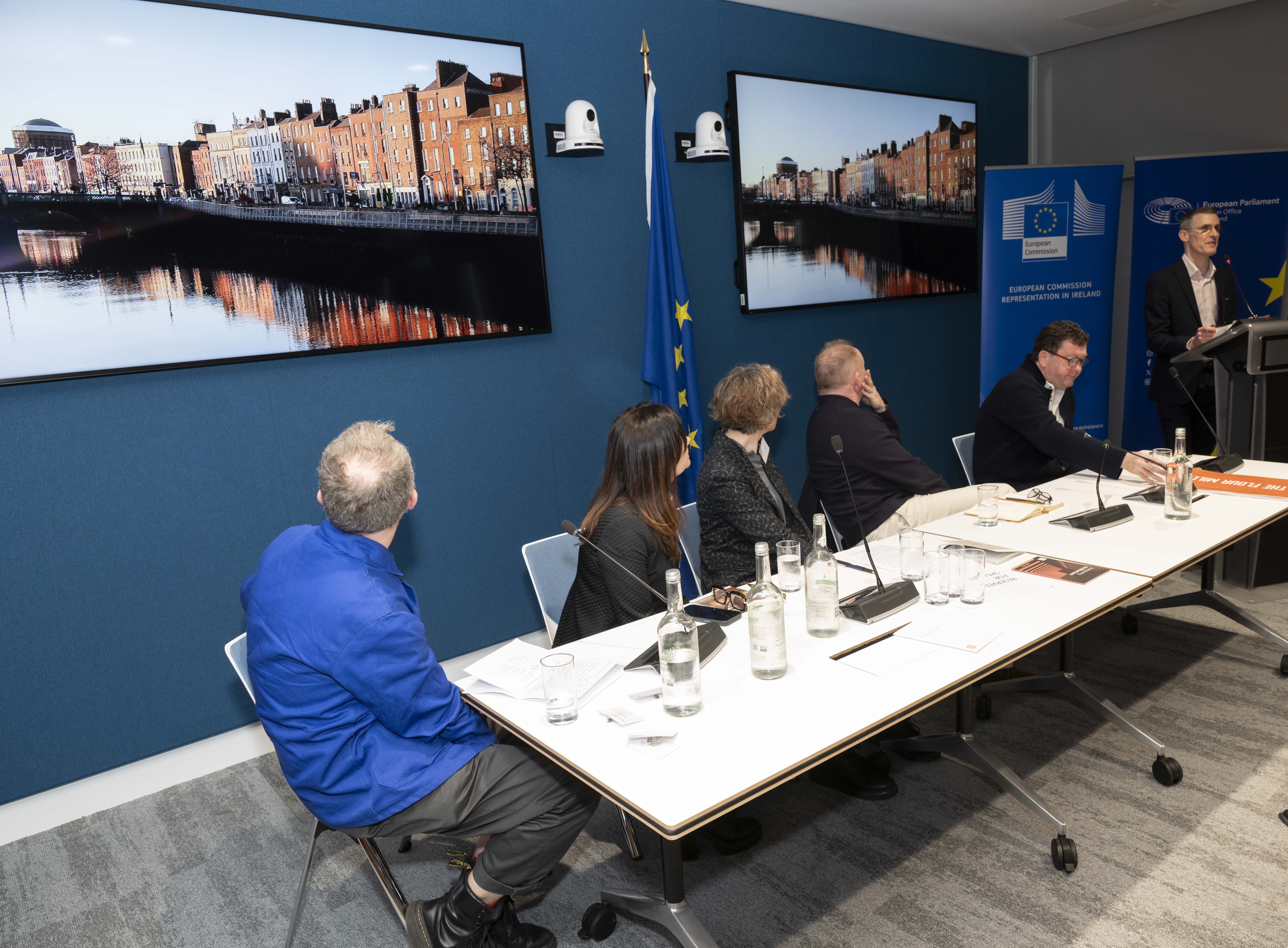
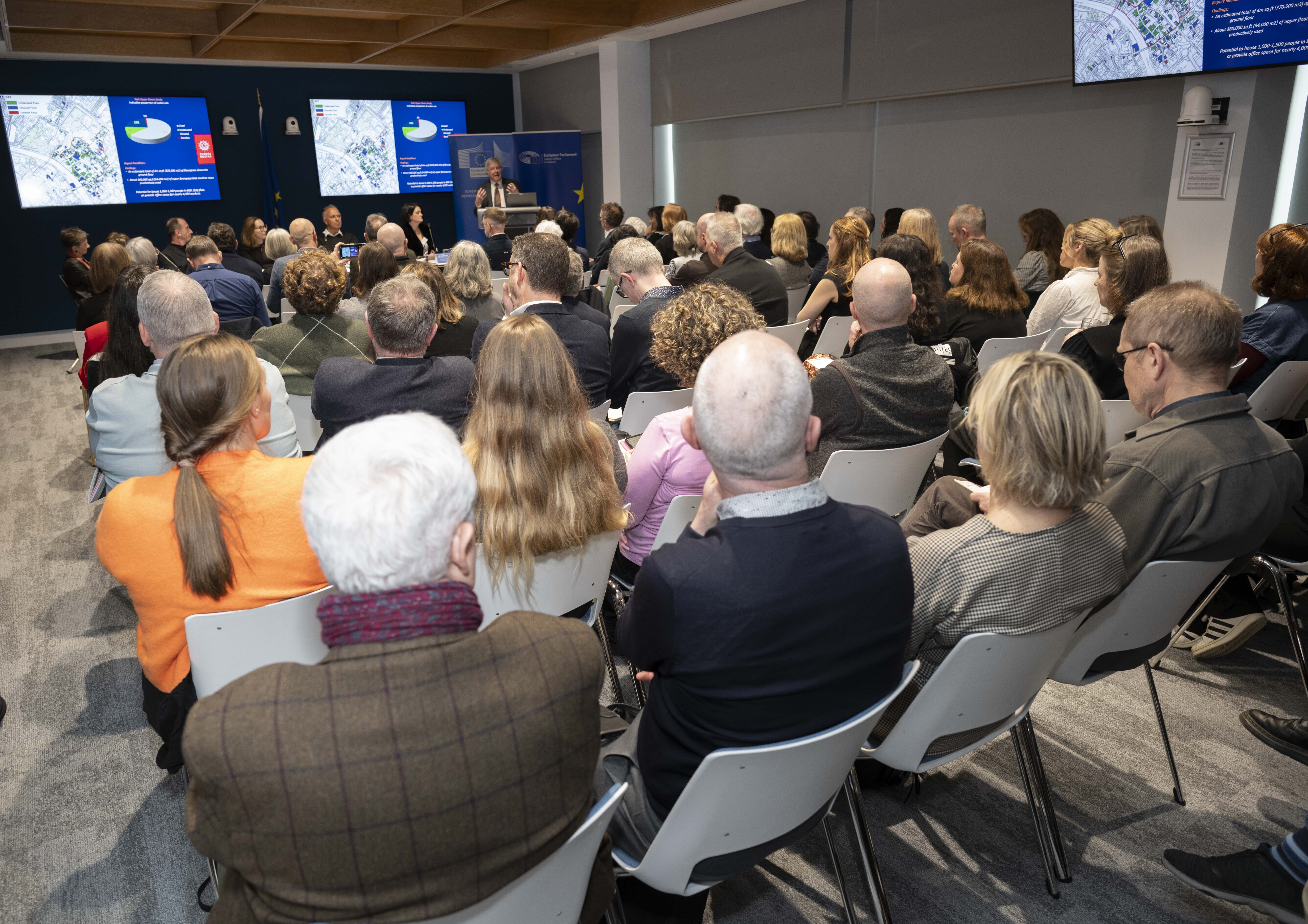
Leading policymakers, architects, and conservation specialists from across Ireland and Europe gathered at Europe House on Friday, 27 March 2026 for a major conference exploring how the adaptive reuse of historic buildings can help address climate change, housing supply, and sustainable development.
Titled “Conserving Ireland’s Architectural Heritage: New Life for Historic Buildings and Places through a Shared Culture of Adaptation & Reuse,” the conference brought together a diverse range of international speakers and Irish practitioners to promote the reuse of existing buildings and places, to share good practice, research and case studies in heritage-led regeneration.
The event was delivered through a partnership between the Irish Georgian Society, the European Parliament Liaison Office in Ireland, the European Commission Representation in Ireland, and the Department of Housing, Local Government and Heritage’s National Built Heritage Service with support from the Office of Public Works and the Royal Institute of the Architects of Ireland. The conference formed part of a broader architecture policy programme, entitled ‘Value for Many’, and aligned with Ireland’s upcoming EU Presidency in July 2026.
Across a full-day programme, speakers explored how adapting and reusing existing buildings can significantly reduce embodied carbon, minimise waste, and contribute to more sustainable, circular construction practices, particularly the revitalisation of traditional skills and training. Presentations also addressed the role of adaptive reuse in unlocking underutilised building stock for housing, developing new neighbourhoods, revitalising urban centres, and preserving cultural identity.
Sessions highlighted the alignment between heritage reuse and key European policy frameworks, including climate targets for 2050, the EU Affordable Housing Plan, and the principles of the New European Bauhaus — promoting development that is sustainable, inclusive, and of high design quality.
Drawing on a wide range of case studies and professional expertise, contributors emphasised the importance of cross-sector collaboration — bringing together government, industry, and communities — to overcome regulatory, financial, and technical barriers to reuse.
The conference underscored the growing momentum behind adaptive reuse as a central strategy in shaping resilient and liveable cities and towns, positioning Ireland as a leader in advancing a shared European approach to transforming the built environment through heritage-led regeneration, based on experience gained from the implementation of the ERDF THRIVE Funding programme nationally.
Also the conference presented a unique moment for built heritage stakeholders to reflect on the opportunity of a shared culture of adaptation & reuse and to consider The 'Dublin Declaration’, as an appropriate legacy to the conference, a call to action on the theme New Life for Historic Buildings and Places through a Shared Culture of Adaptation & Reuse. For this reason, in her concluding remarks at the conference Charlotte Sheridan tabled for consideration the below tentative Dublin Declaration:
The 'Dublin Declaration’, building on the conference outcome and EU policy momentum, will reference the seven guiding principles of the 2024 Krakow Declaration (by ACE, Europa Nostra and ICOMOS), as the basis for future discussion on this theme, namely prioritising renovation and reuse; combining innovation with traditional knowledge; upskilling professionals; co-creation with communities; championing quality in governance and funding; sharing knowledge; and preparing built heritage for future risks.
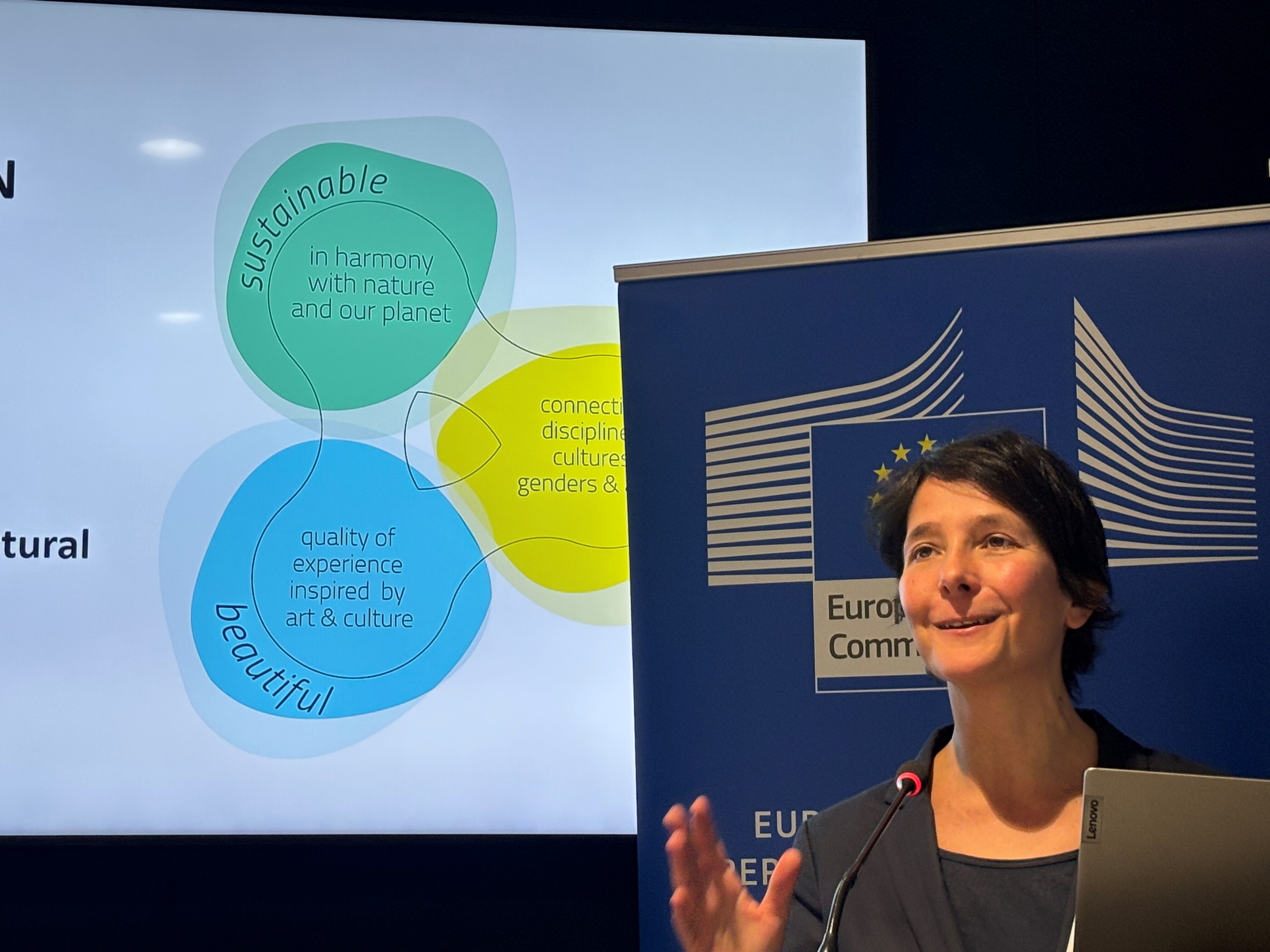
The 'Dublin Declaration’, proposes working with the New European Bauhaus (NEB) concept and the working model of a NEB Local Chapter with the purpose of strengthening NEB community members and wider stakeholder collaboration, sharing knowledge and good practice and developing a culture of adaptation and reuse of built heritage assets, grounded in the NEB values of beautiful, sustainable, together.
A 'Dublin Declaration’, proposes working and reporting back within the EU presidency programme on the theme; New Life for Historic Buildings and Places through a Shared Culture of Adaptation & Reuse.
The conference, which was at full capacity, was recorded and the presentations are now available to watch on the Irish Georgian Society’s YouTube channel. Please see below for the links to watch each of the conference sessions.
The Irish Georgian Society thanks our partners; the European Parliament Liaison Office in Ireland (Fearghas Ó Béaraand Jeremy O'Sullivan), the European Commission Representation in Ireland (Peter Power and Joan Flanagan), and the Department of Housing, Local Government and Heritage’s National Built Heritage Service (Sarah Waters and Nicola Matthews); supporters, Office of Public Works (Conor Sreenan) and the Royal Institute of the Architects of Ireland (Dr Sandra O'Connell); speakers (Graham Bell, Gerard Carty, Frank Cooney, Morris Conway, Andrée Dargan, Colm Doyle, Dr Claudio Gulli, Fionnuala Hayes, Michael Horan, Lar Joye, Niamh Kiernan, Joe Lawrence, Niamh Lunny, Olof Martinsson, Lisa McVeigh, Nicola Matthews, Valerie Mulvin, Elena Montani, Shane Nolan, Ciaran O’Brien, Michiel Riedijk, Emmett Scanlon, Grainne Shaffrey, Sarah Woods, Giulia Vallone); and Chairs
(Donough Cahill, Jacqueline Hall, Graham Hickey, Michael O’Boyle, Angela Rolfe, Charlotte Sheridanand Fionnuala Sweeney) for their sharing their expertise.
Fearghas Ó Béara, Head of the European Parliament Liaison Office in Ireland
Peter Power, Head of the European Commission Representation in Ireland
Jacqueline Hall, Chair Irish Georgian Society
Session1- Leadership (Chair Donough Cahill, Executive Director, Irish Georgian Society)
Introduction by Nicola Matthews, Senior Architect National Built Heritage Service in the Department of Housing, Local Government and Heritage and National Contact Point New European Bauhaus in Ireland.
Keynote: Historic places and spaces under transformation–Varvsstaden by Olof Martinsson, Heritage Officer for Malmö (Stadsantikvarie)
Panellists: Morris Conway, Waterford City & County Council; Niamh Kiernan, Architectural Conservation Officer, Dublin City Council; Lar Joye, Port Heritage Director, Dublin Port Company.
Session2 - Culture (Chair; Fionnuala Sweeney, Head of Film and Architecture, the Arts Council)
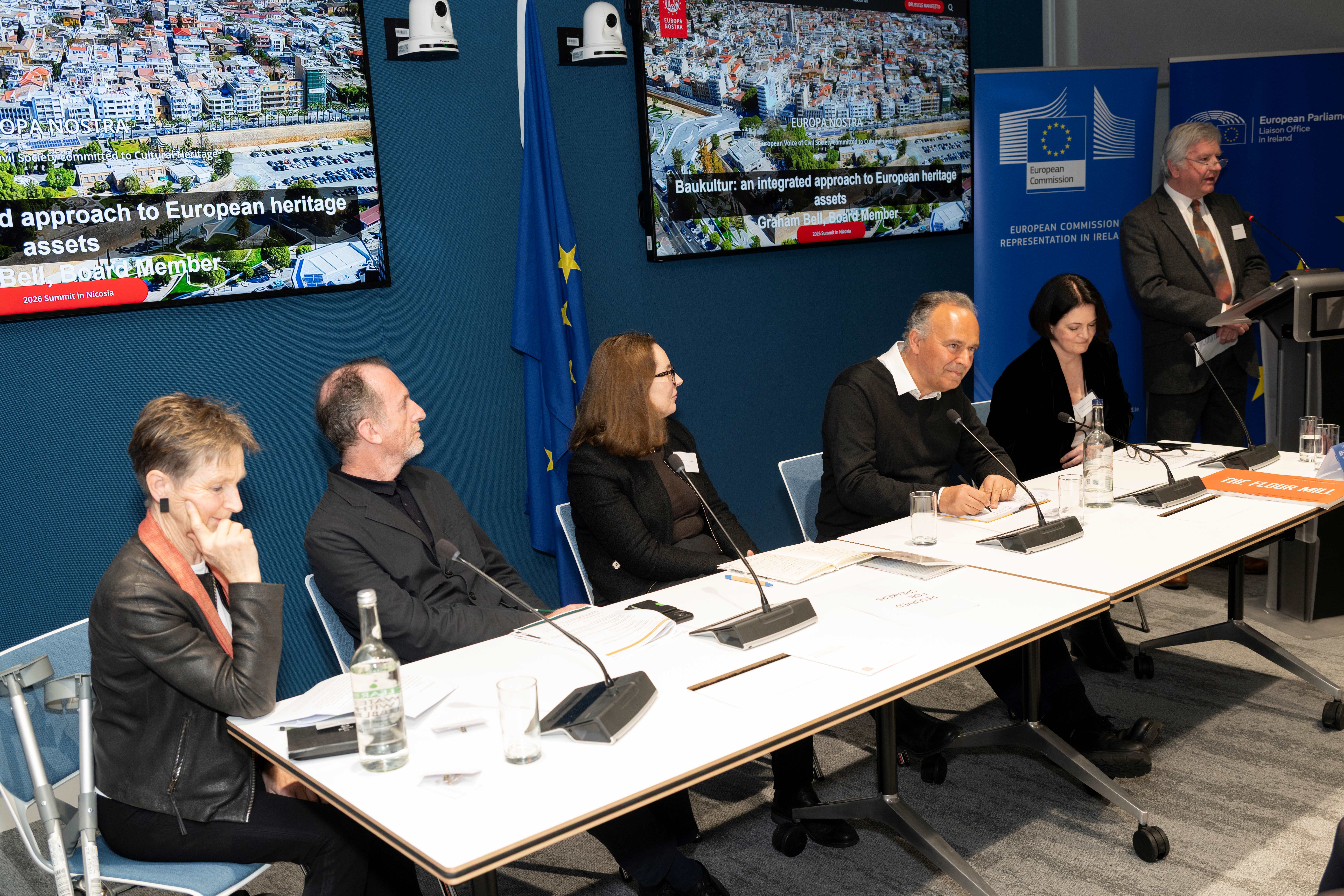
Introduction by Graham Bell, Europa Nostra Baukultur: an integrated approach to European heritage assets.
Keynote:Gare Maritime and other projects of transformation, re-imagining existing buildings and places with high quality interventions and materials, distinguishable from the original construction by Michiel Riedijk, founding partner and principal architect, Neutelings Riedijk Architecten
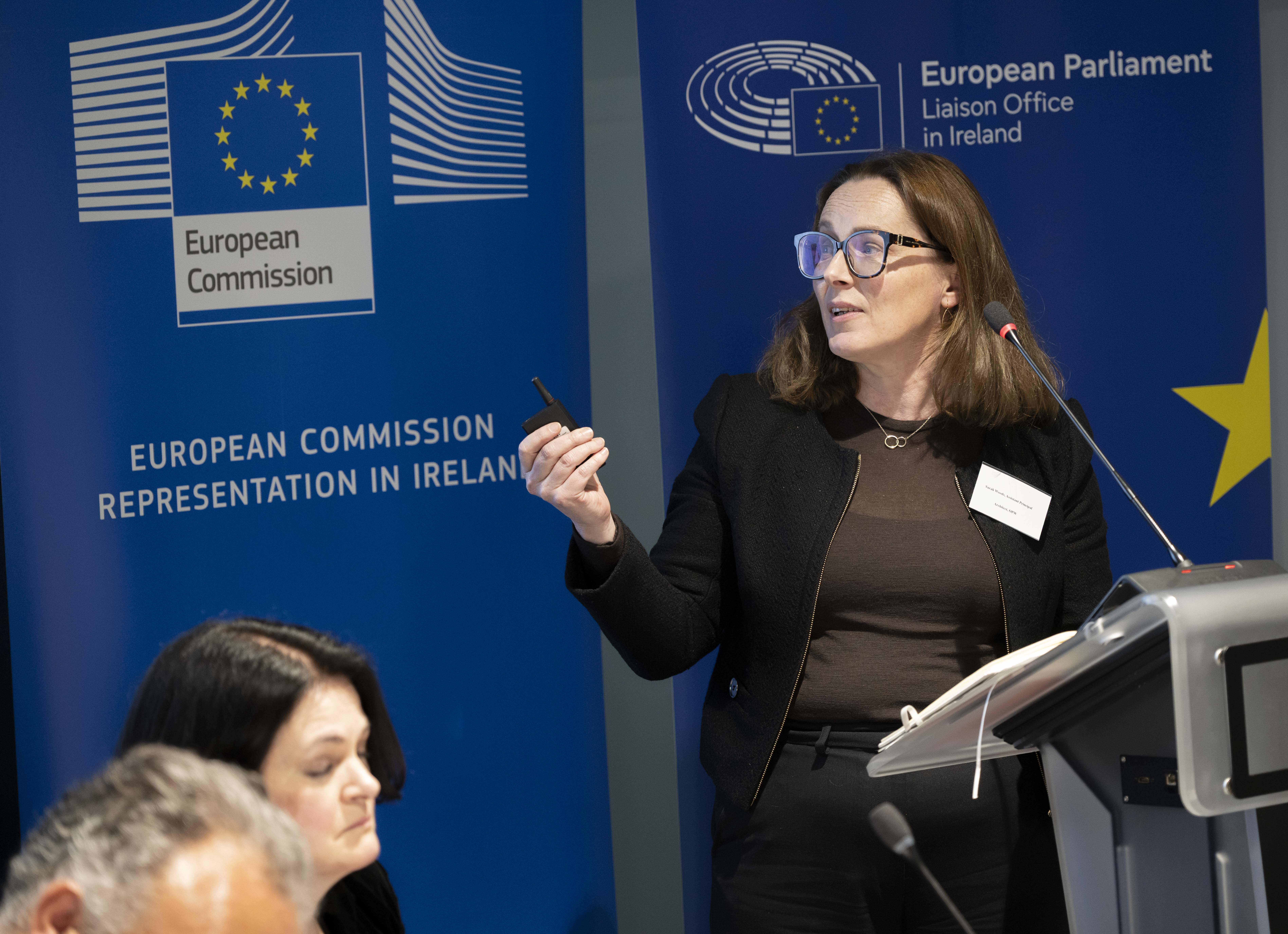
Panellists: Sarah Woods, Assist. Principal Archt. OPW (National Concert Hall); Valerie Mulvin, Director, McCullough Mulvin Architects (Central Hotel); Gerard Carty,
Director, Grafton Architects (Crawford Art Gallery)
Session 3 - Sustainability *access to recording is pending (Chair; Graham Hickey, CEO, Dublin Civic Trust and18 Ormond Quay Upper)
Introduction by Emmett Scanlon, Director, Irish Architecture Foundation
Keynote:Do “as little as possible but as much as is necessary”: two projects adopting this philosophy in the successful adaptation and reuse of housing and institutional historic structures in Ireland ( Portlaoise Convent and Haulbowline Block 9) by Ciaran O’Brien, Director, O’BFA
Panellists: Joe Lawrence, Director, Lawrence & Long Architects; Niamh Lunny, CEO, Irish Landmark Trust; Giulia Vallone, RIAI Urban Design Committee/Cork County Council
The New European Bauhaus-Beautiful, Sustainable, Together by Elena Montani, Head of Unit, New European Bauhaus Coordination Unit, Joint Research Centre(JRC), European Commission.
Keynote: Palazzo Butera: a project for Palermo and Europe by Dr Claudio Gulli, Director at Palazzo Butera, art historian and curator.
Panellists: Andrée Dargan, Dún Laoghaire Rathdown County Architect (Kelly’s Hotel & Wash House); Grainne Shaffrey, Shaffrey Architects (West Gate House, Drogheda), Frank Cooney, Cooney Architects (Gorey Market House),
Former Belfast Bank, Rathmines by Colm Doyle co-presenting, DMVF Architects
30 Parnell Square House by Lisa McVeigh, DMVF Architects
Magazine Fort, Phoenix Park: stabilization & repair works/traditional skills by Audrey Farrell, Senor Architect OPW and Shane Nolan, Managing Director of Nolans Group Conservation & Restoration Ltd.
Saint Patrick’s Cathedral, Deanery Mews: traditional knowledge and innovation by Fionnuala Hayes, Howley Hayes Cooney Architects
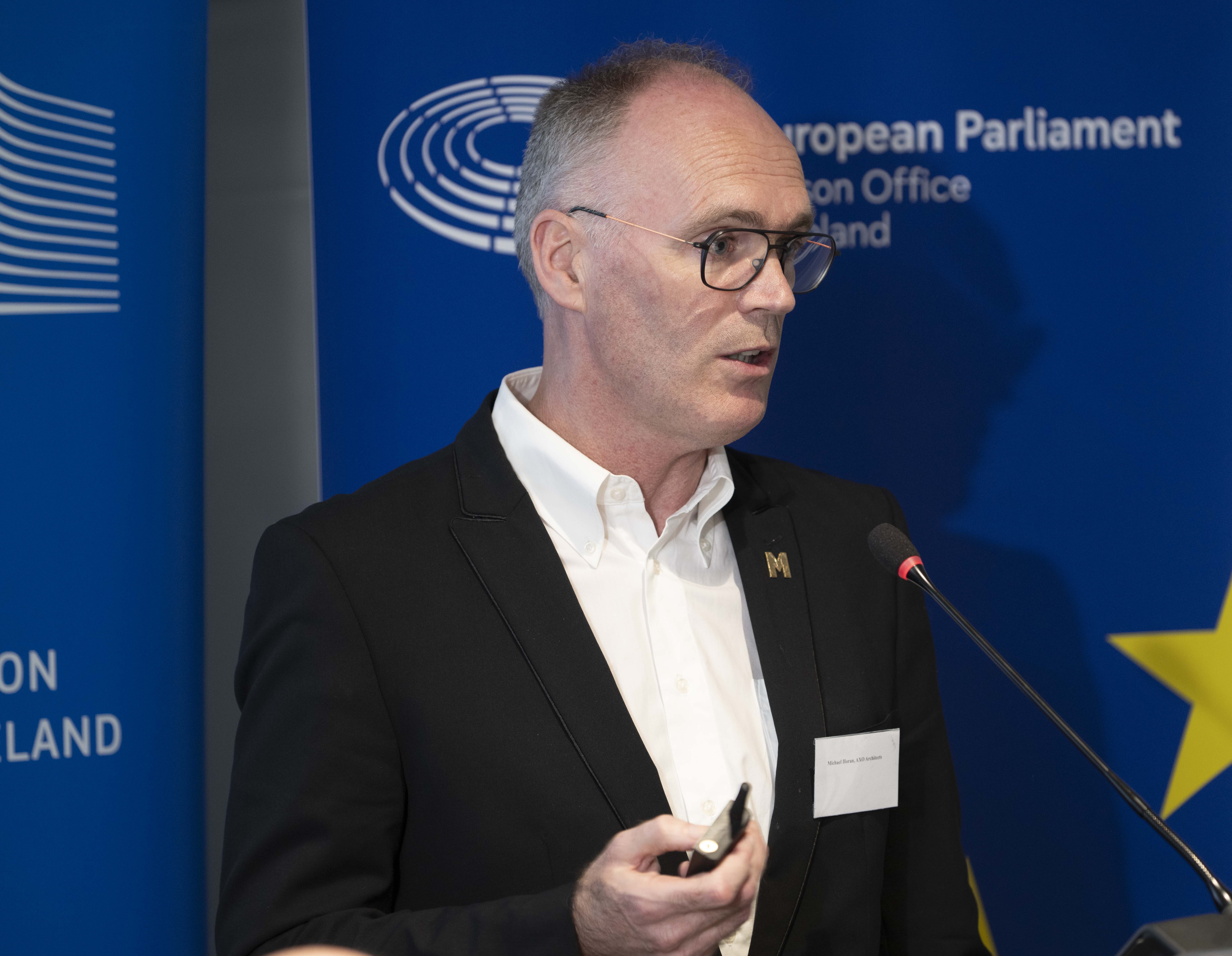
Strokestown Park House and National Famine Museum & Kylemore Abbey by Michael Horan, AXO Architects
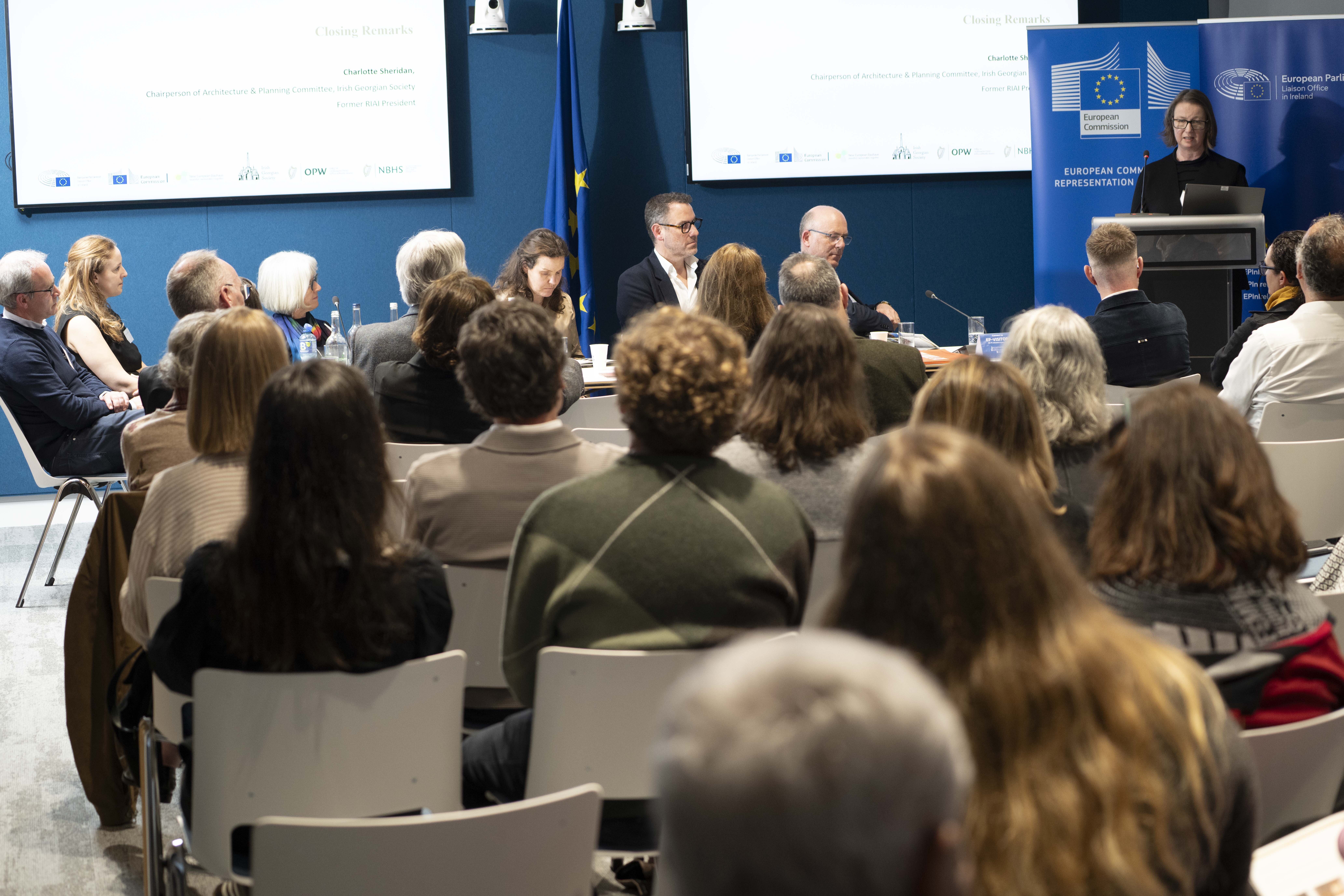
Closing Remarks by Charlotte Sheridan, Chairperson of Architecture & Planning Committee, Irish Georgian Society
A PDF of the conference abstracts and biographies can be downloaded here.
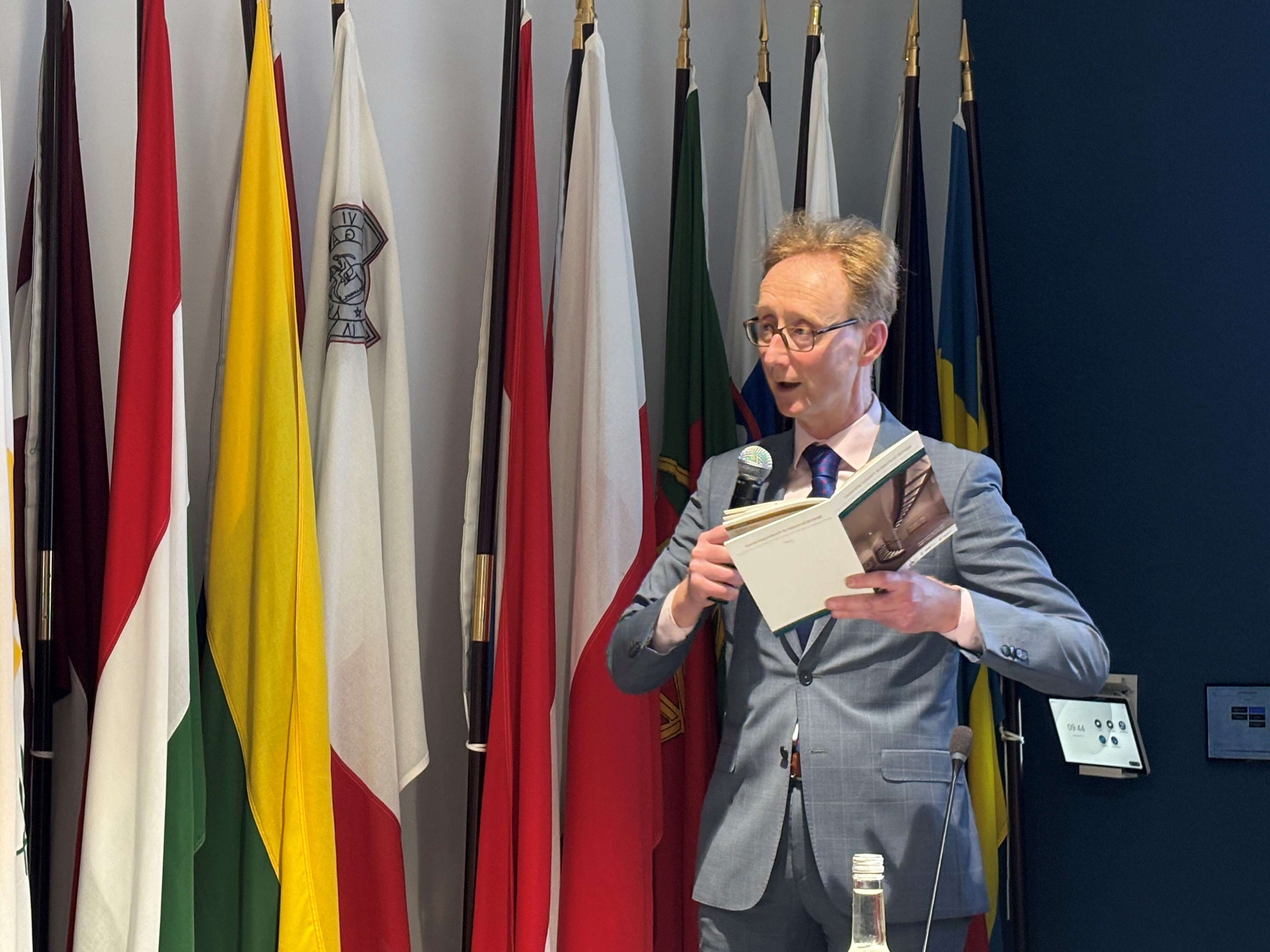
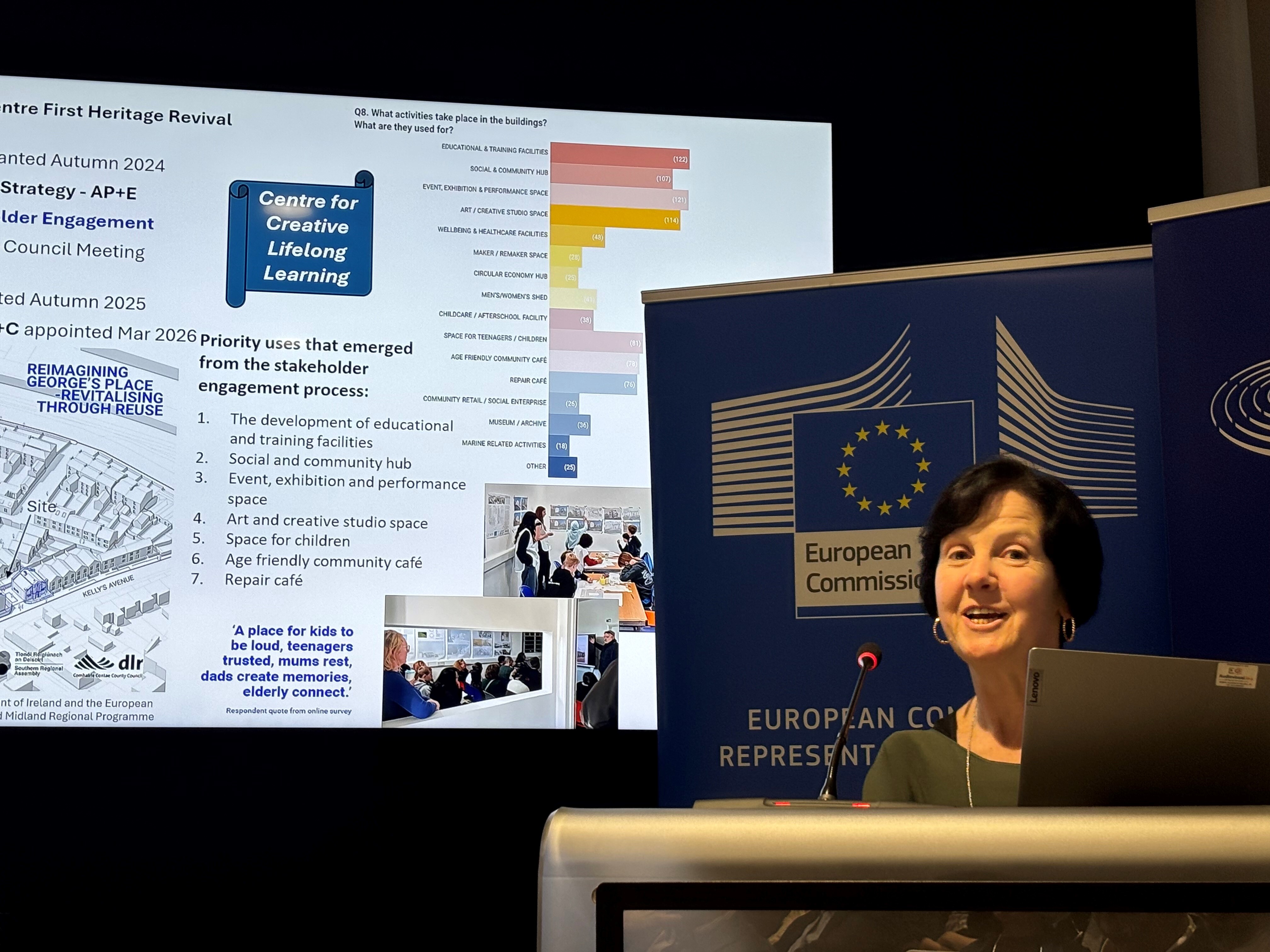
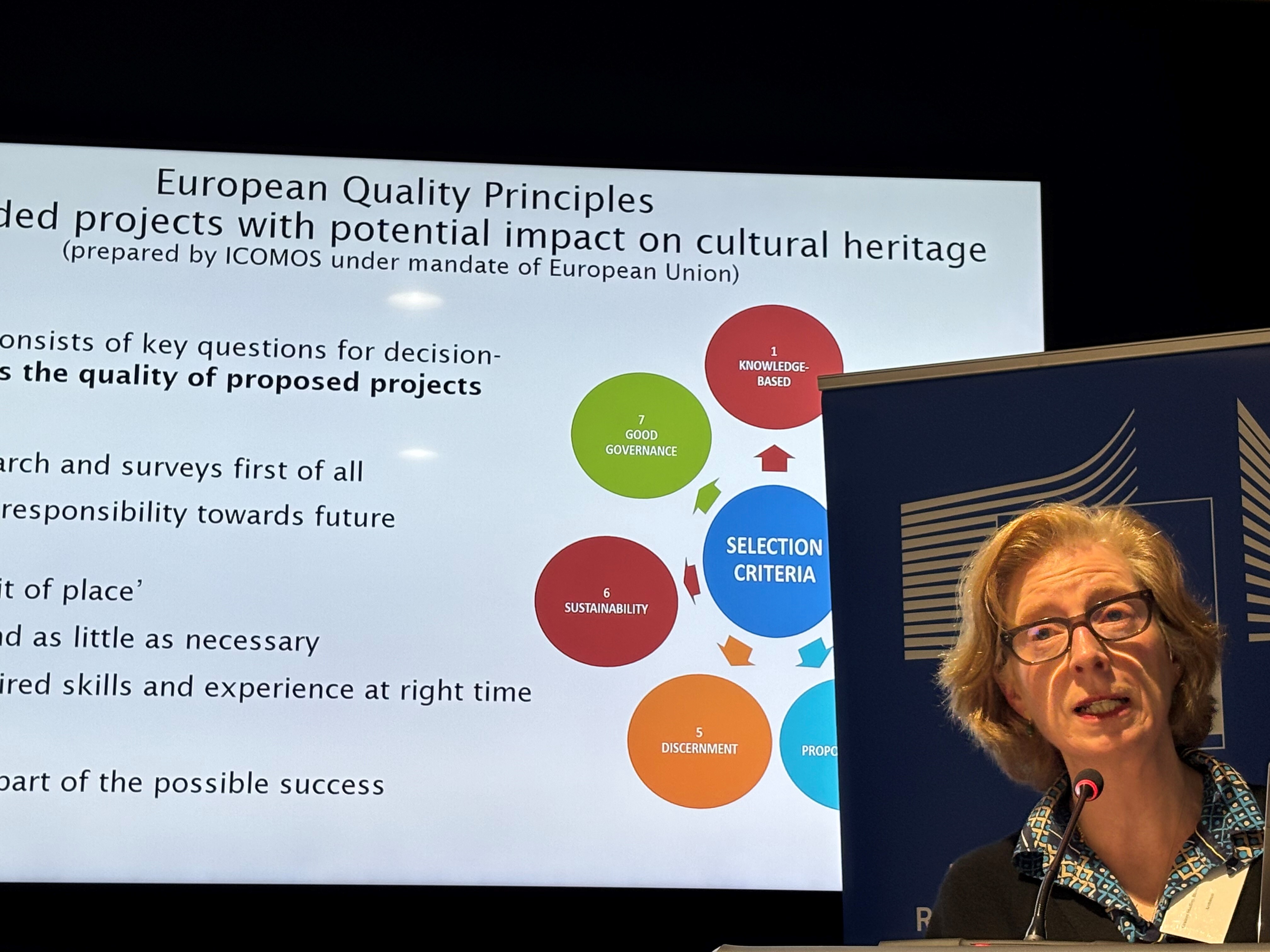
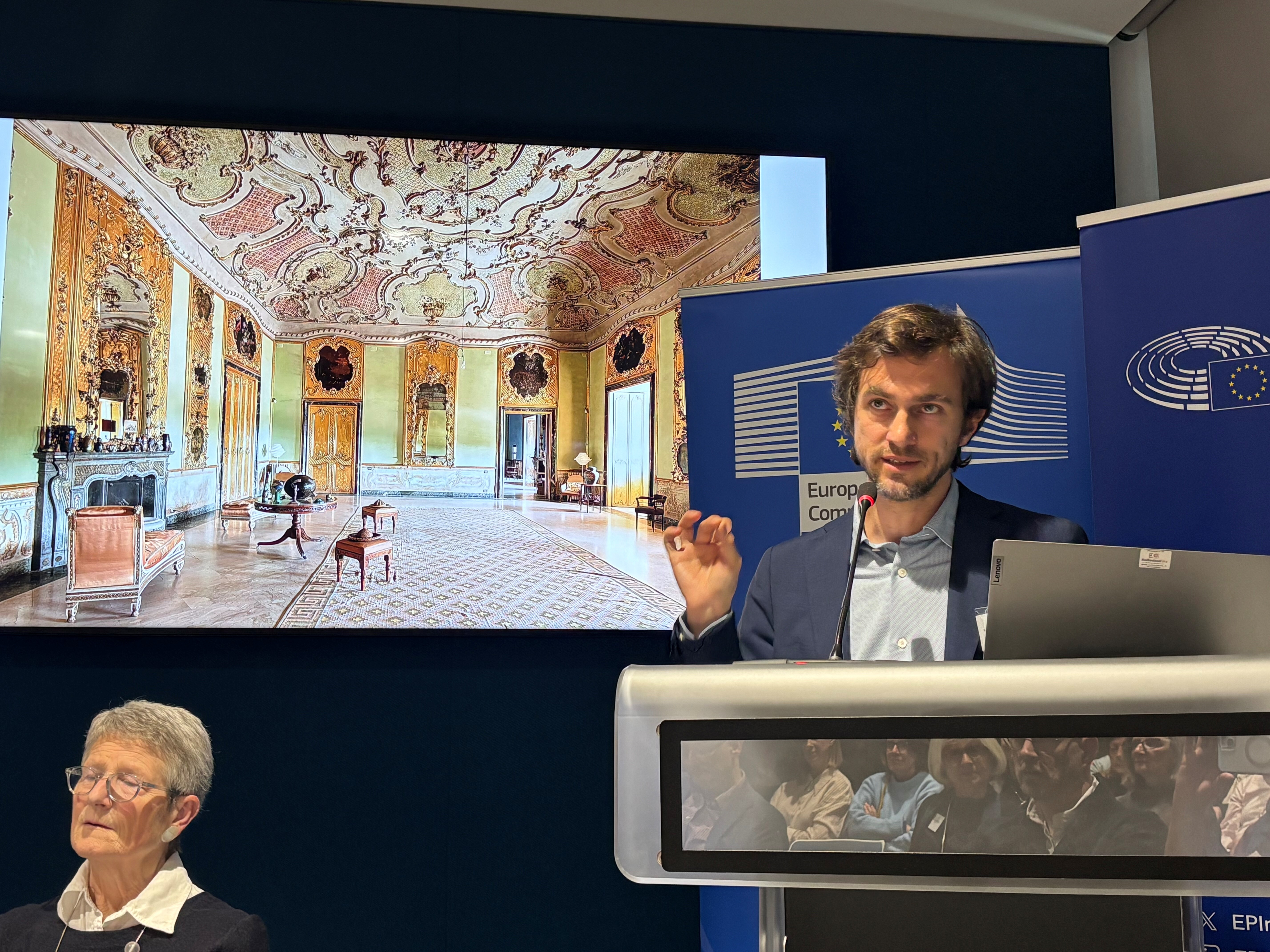
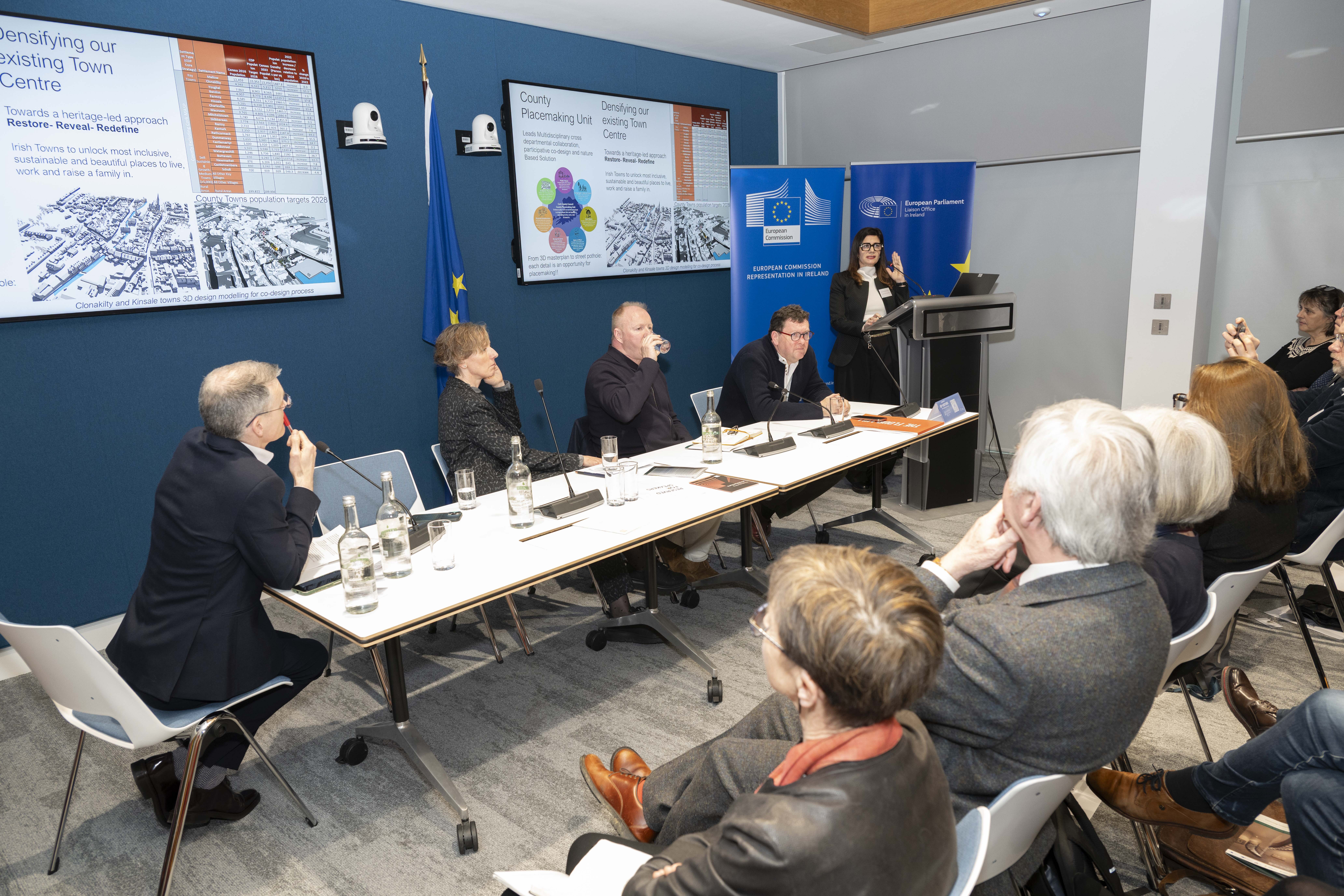
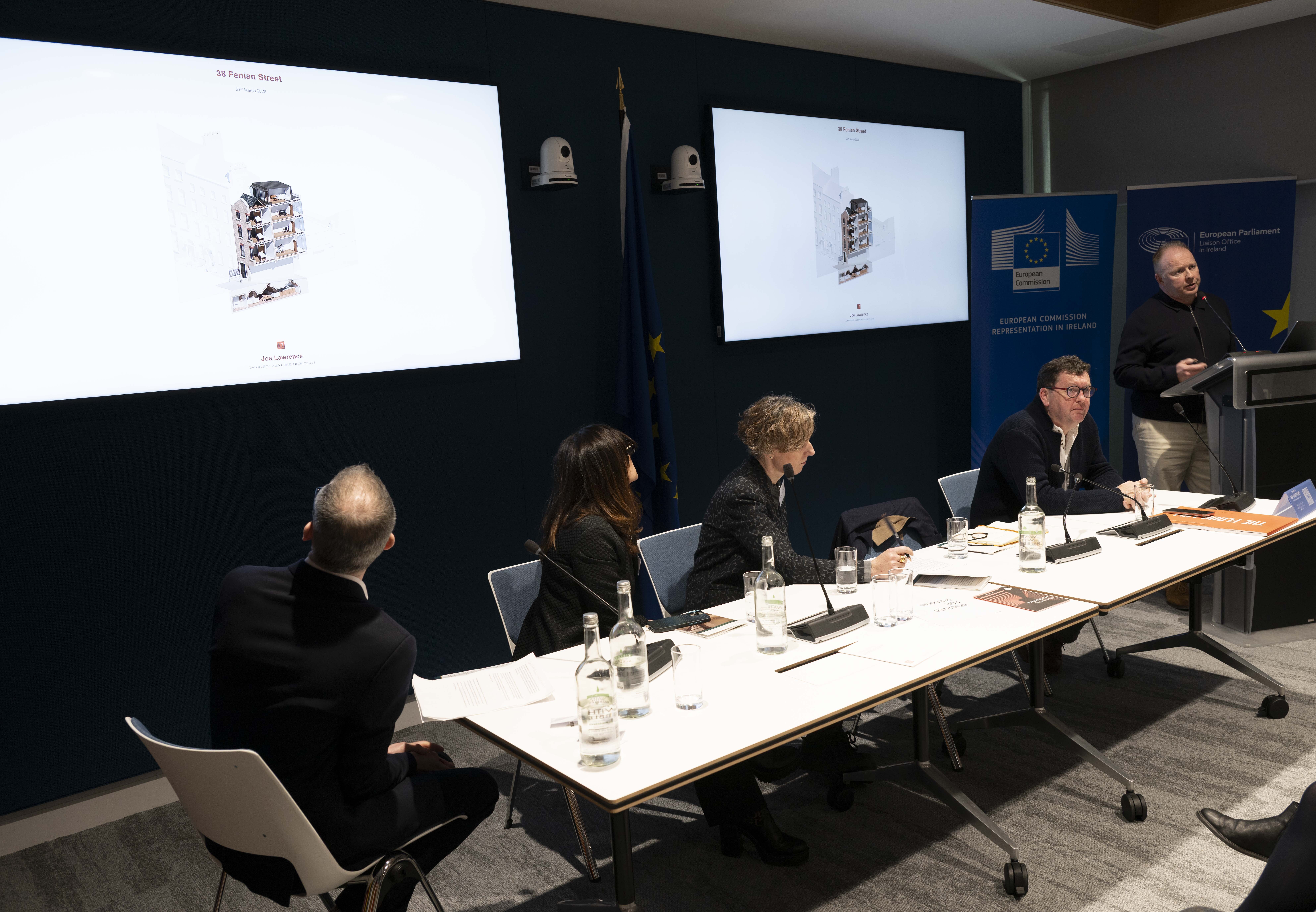
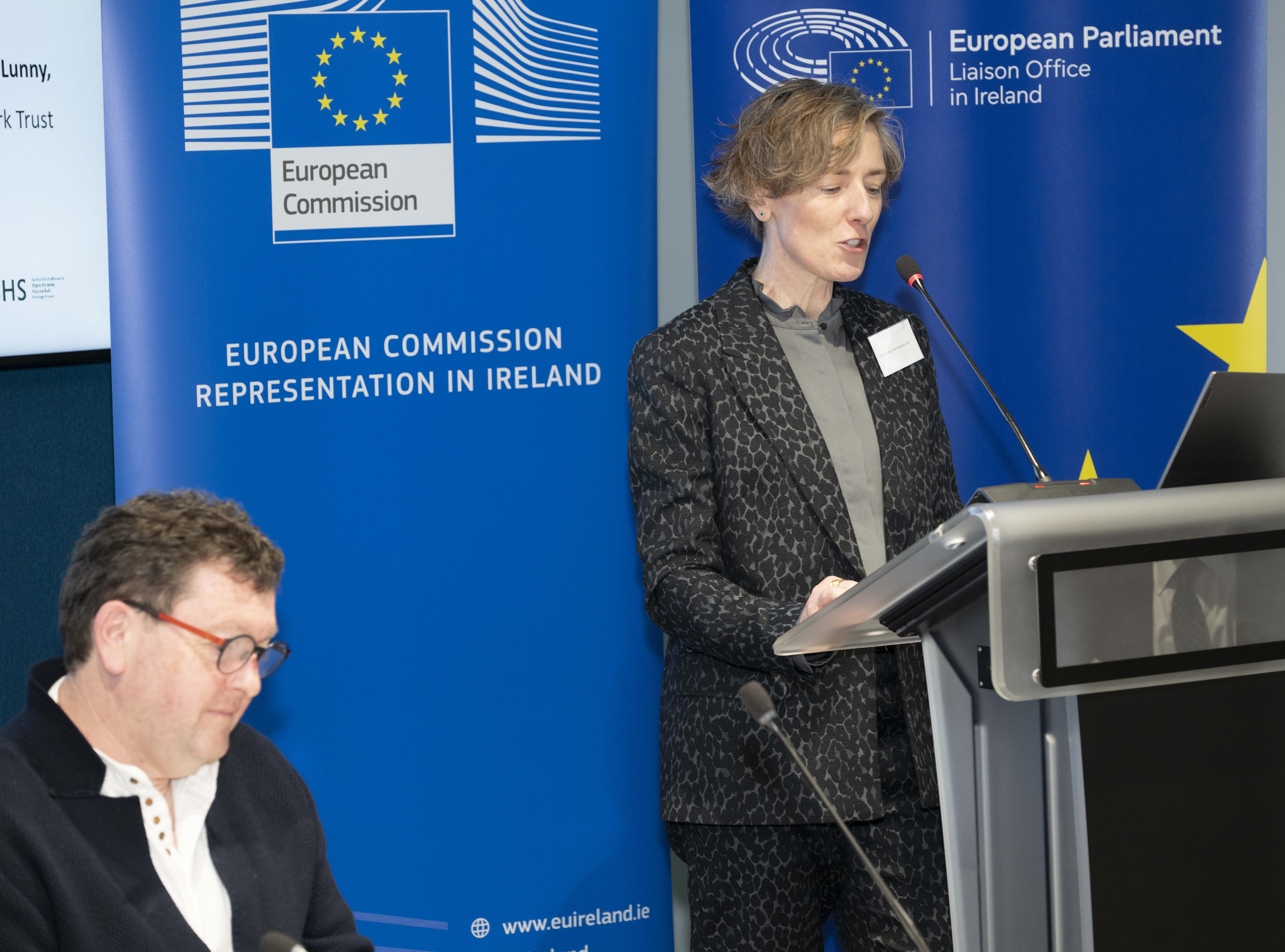
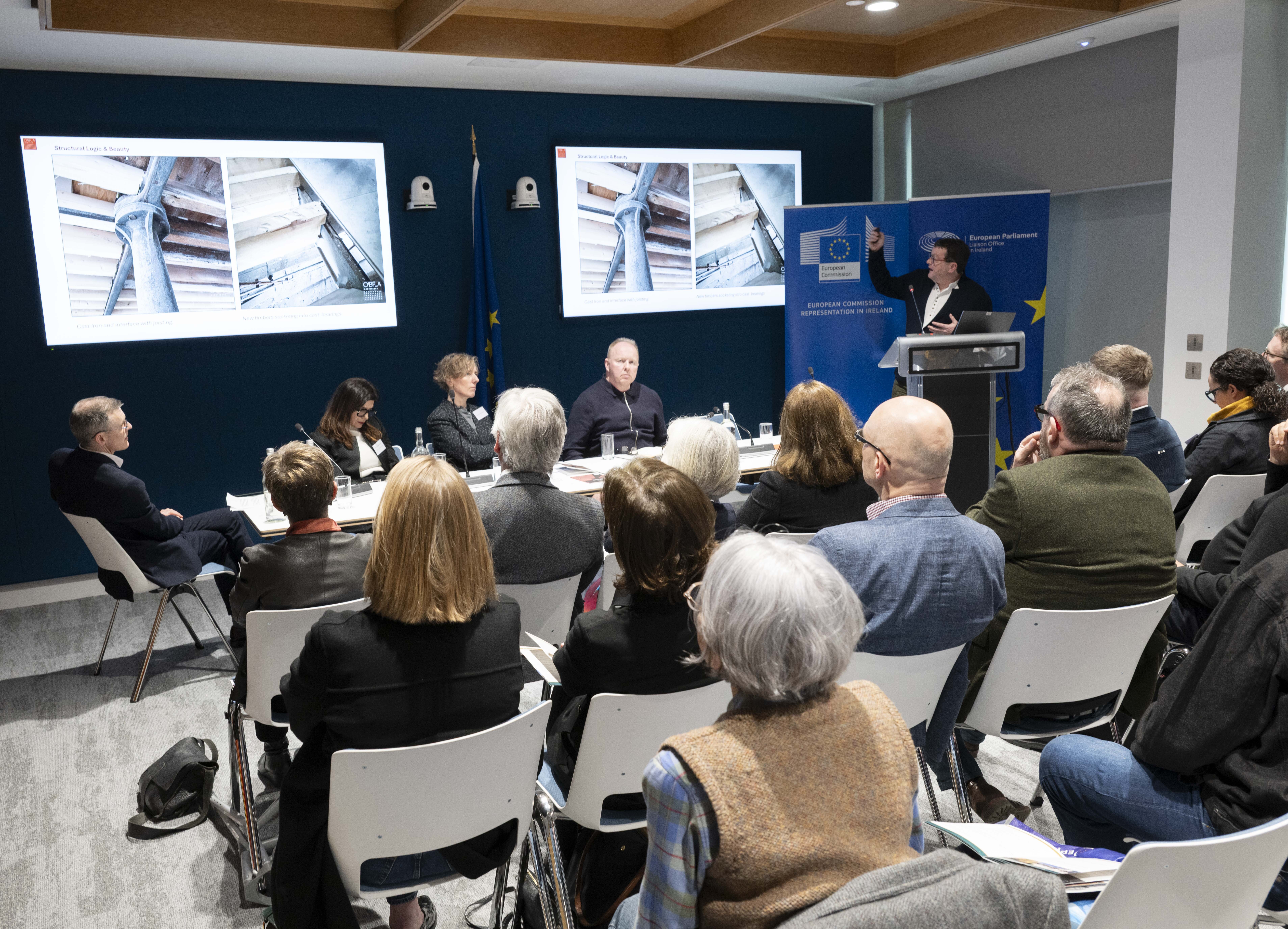
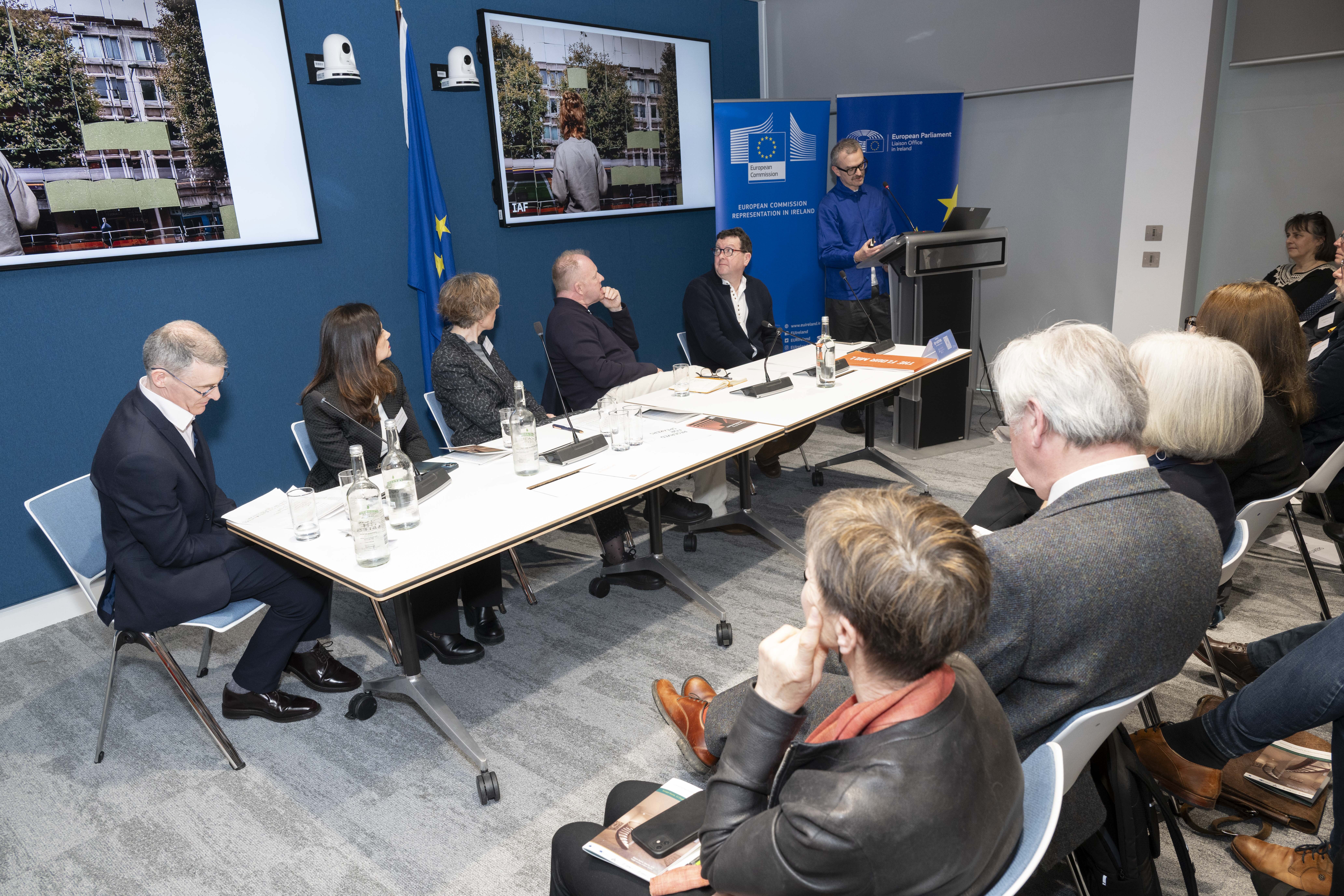
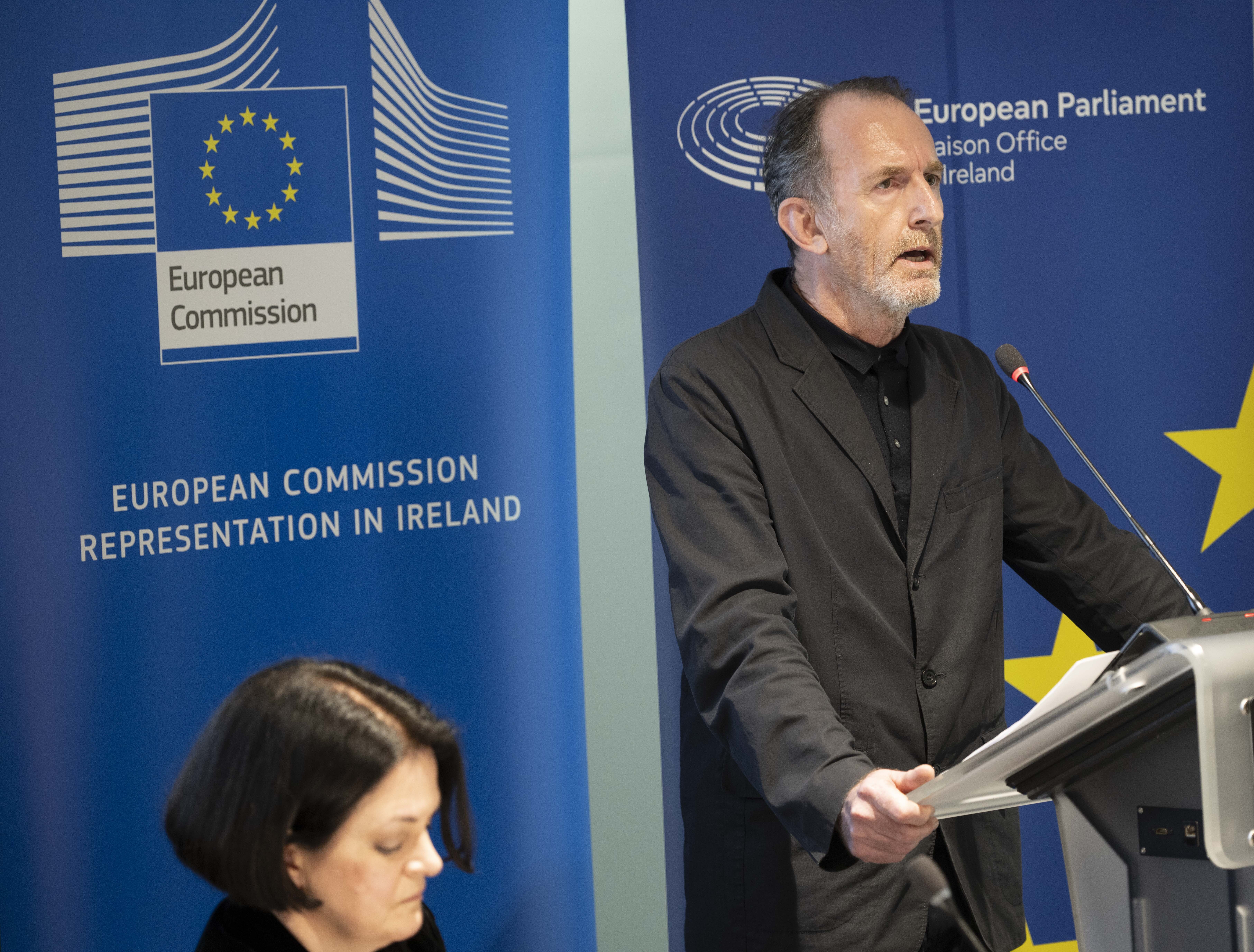


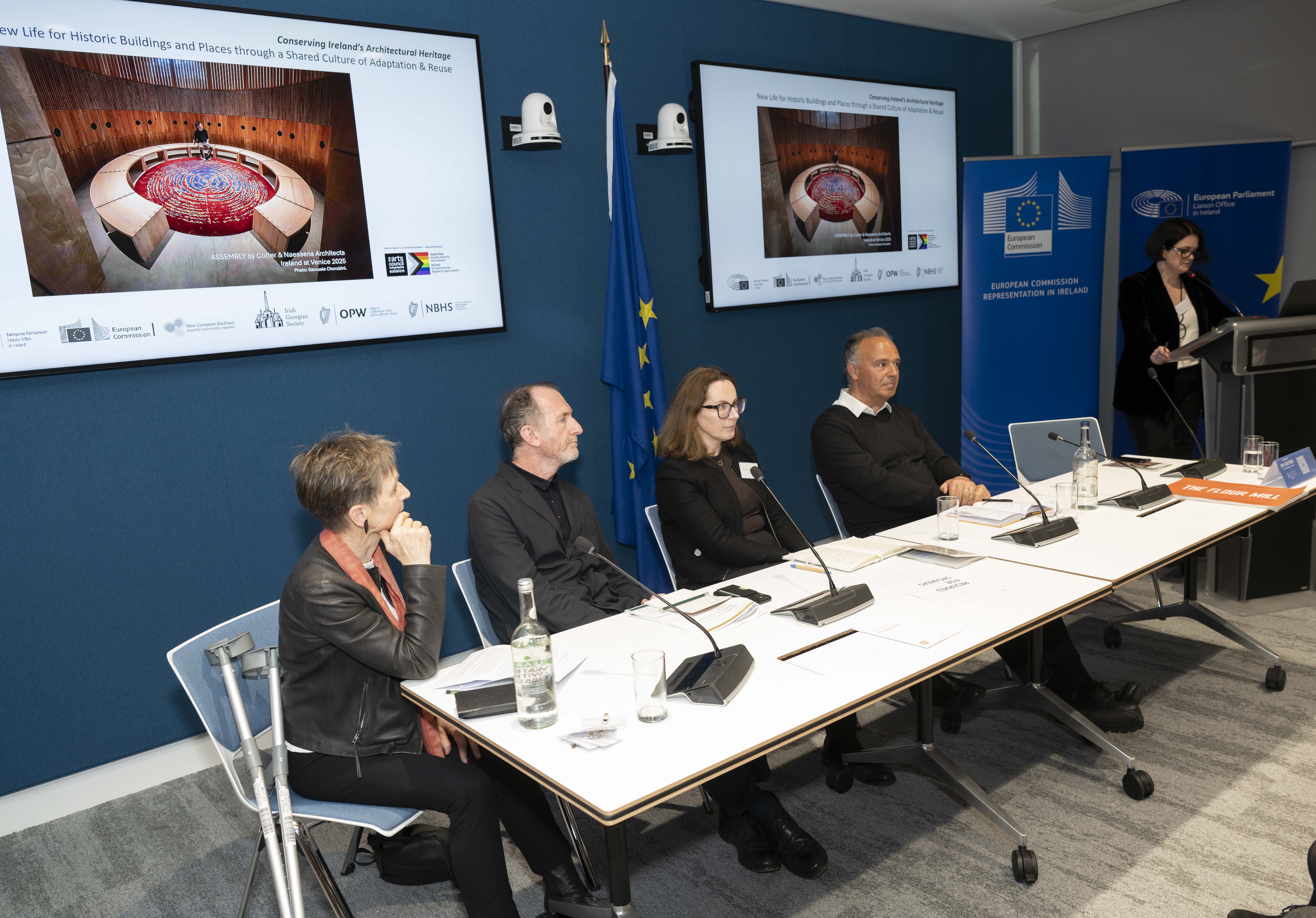
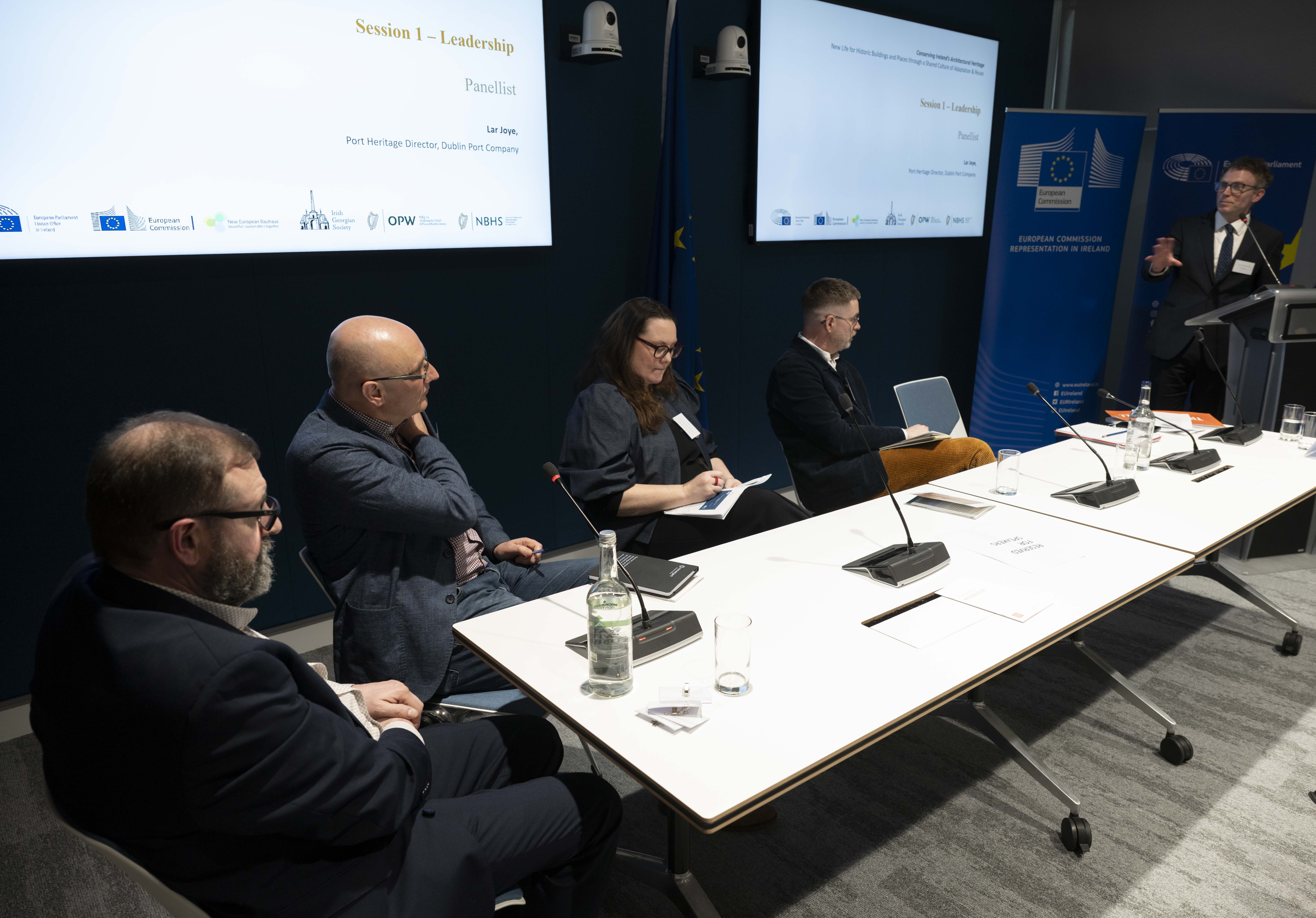
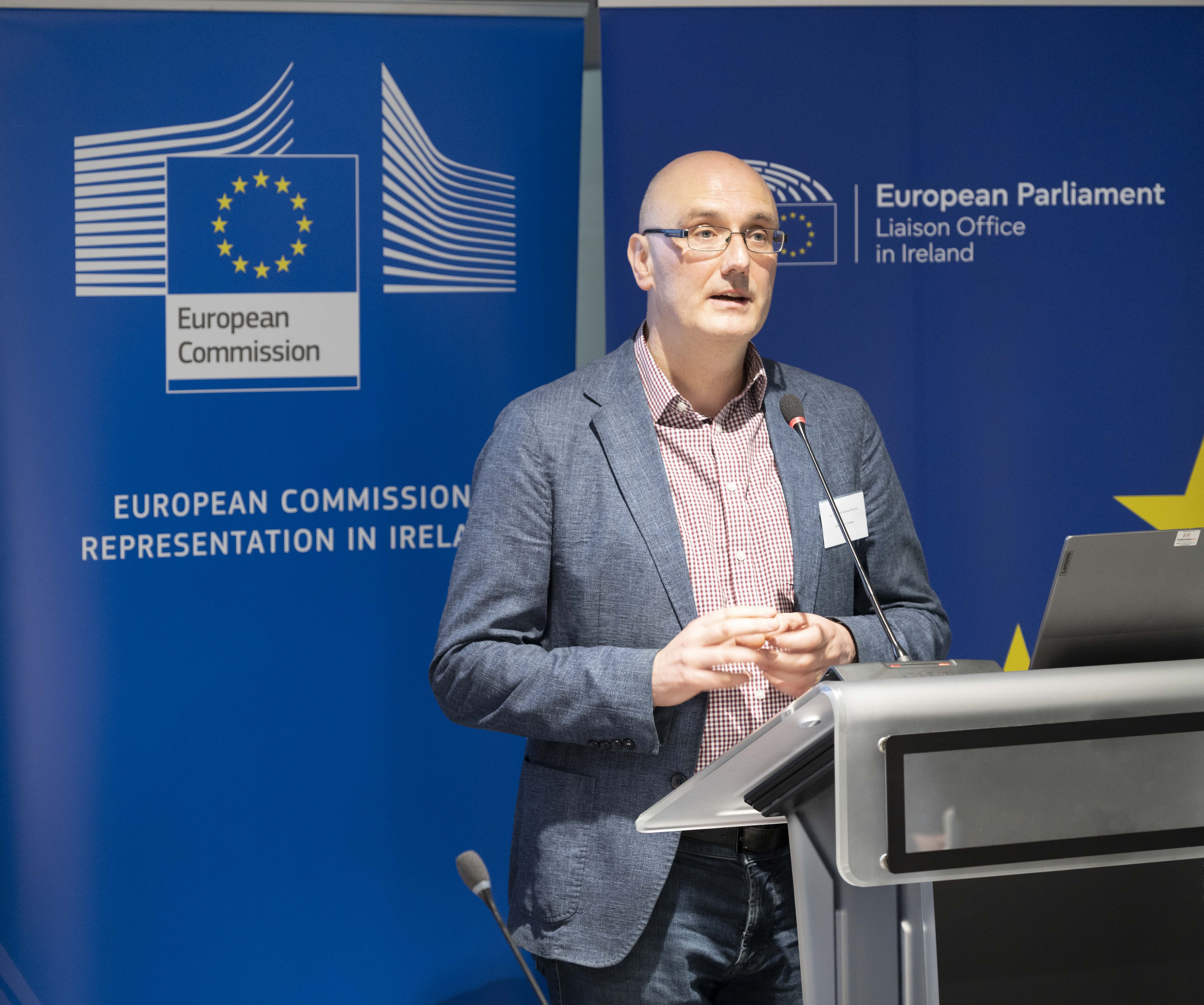
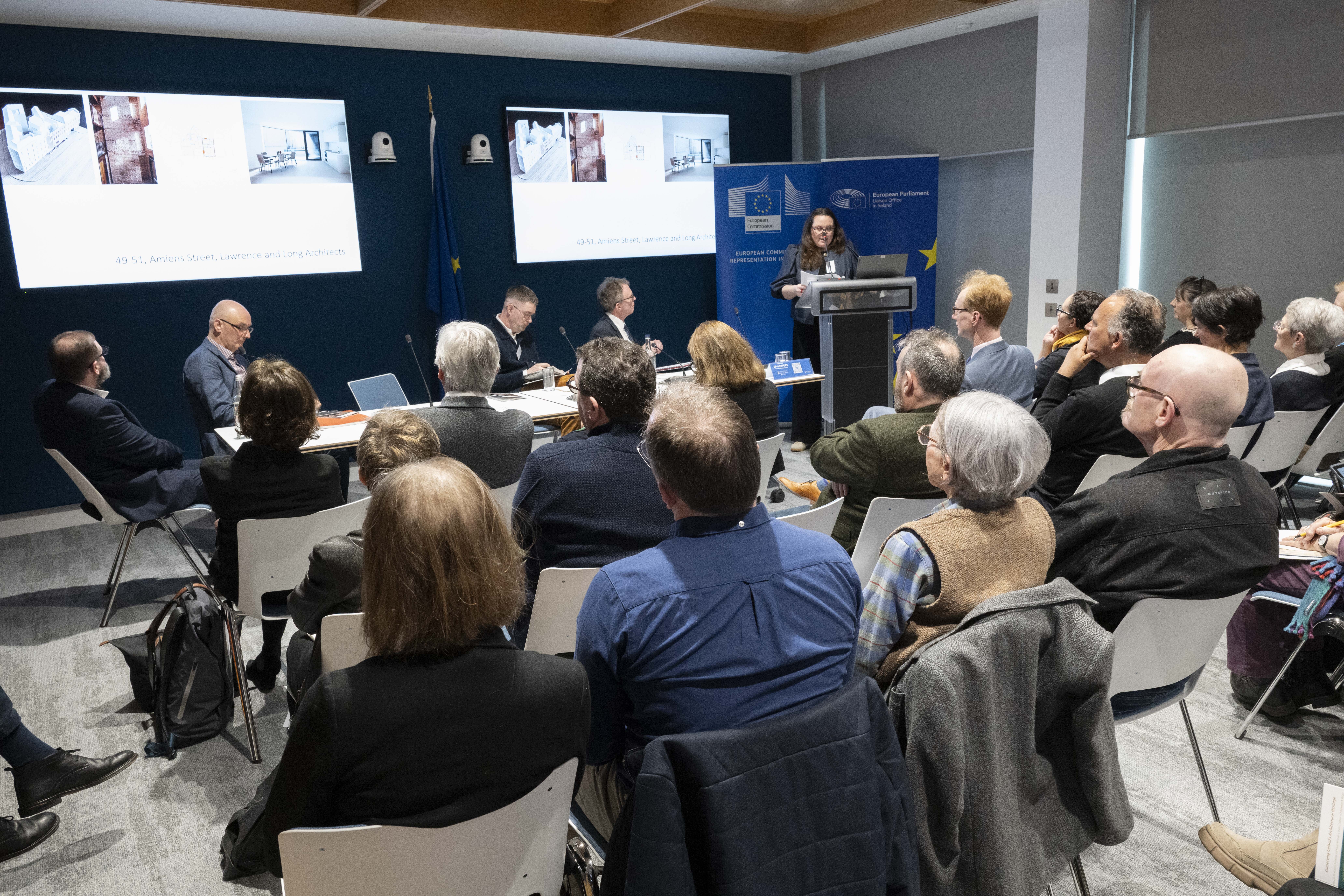
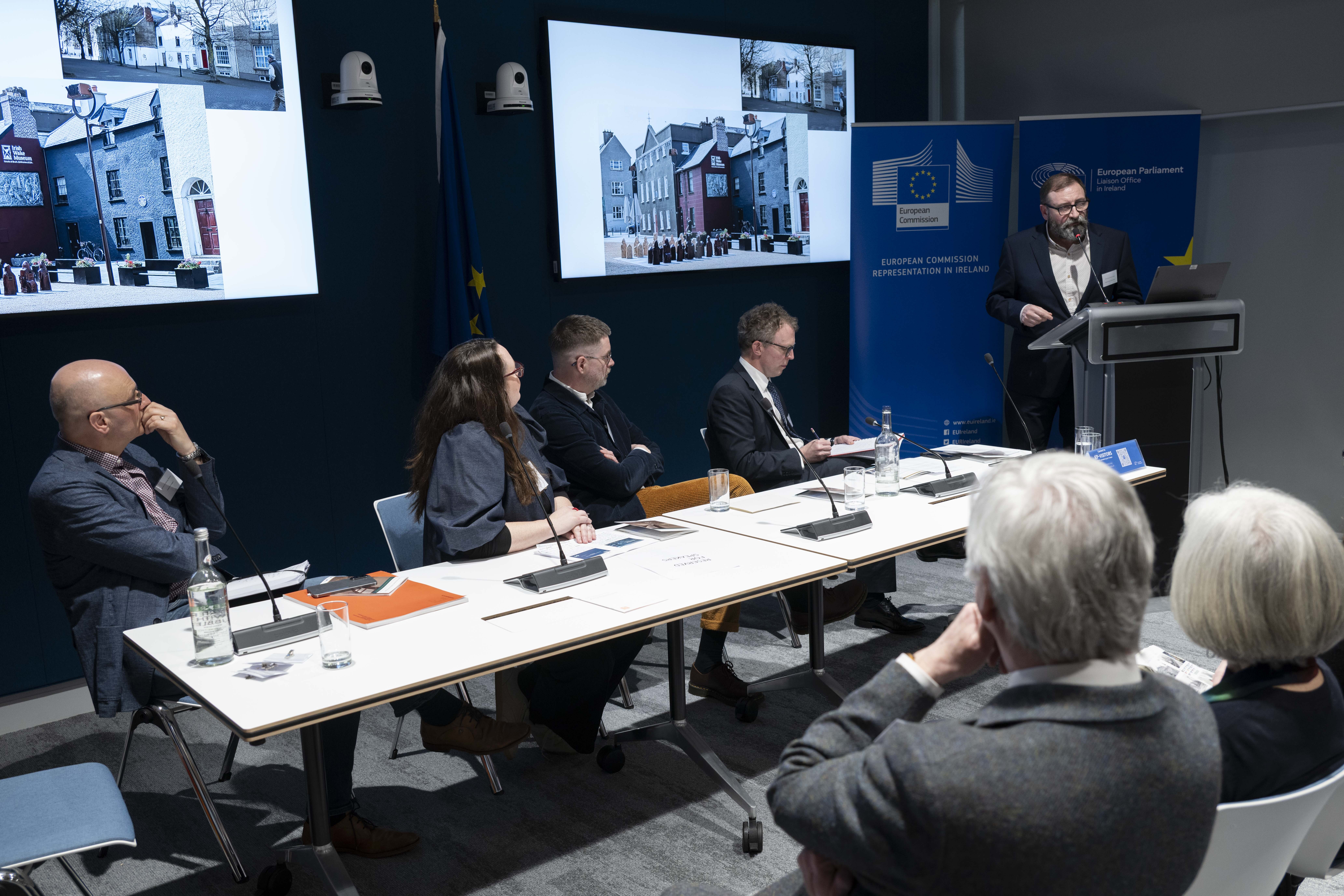
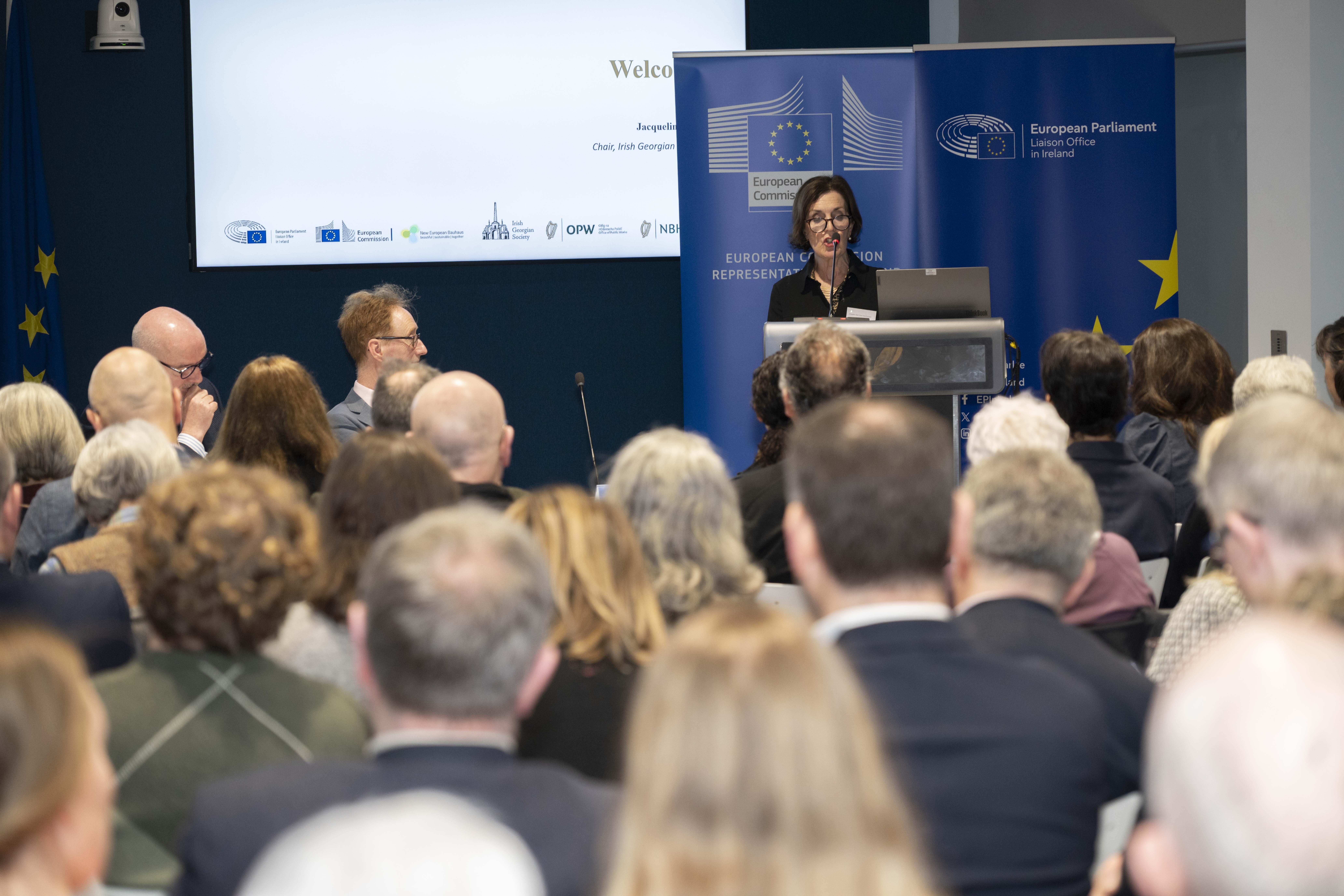
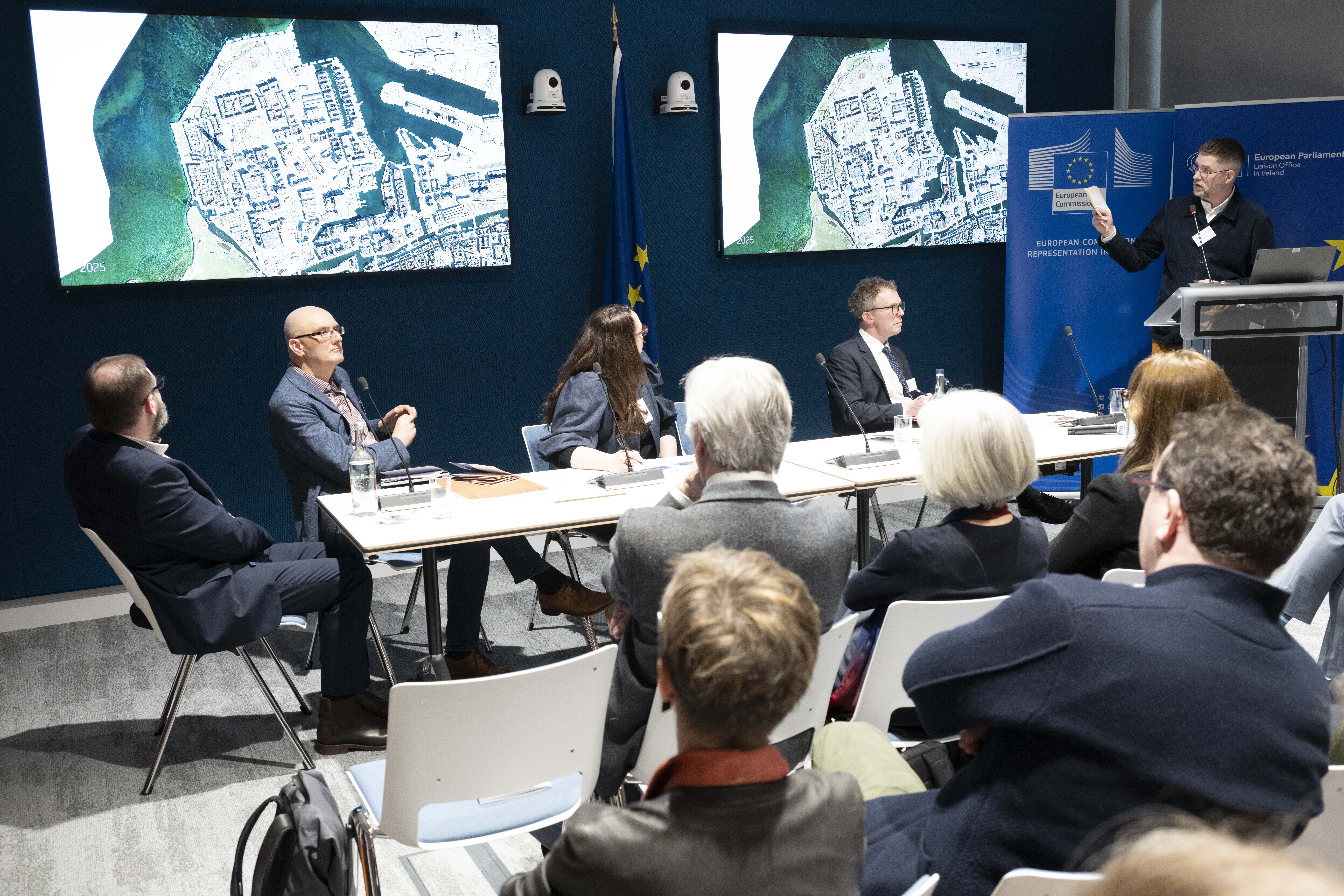
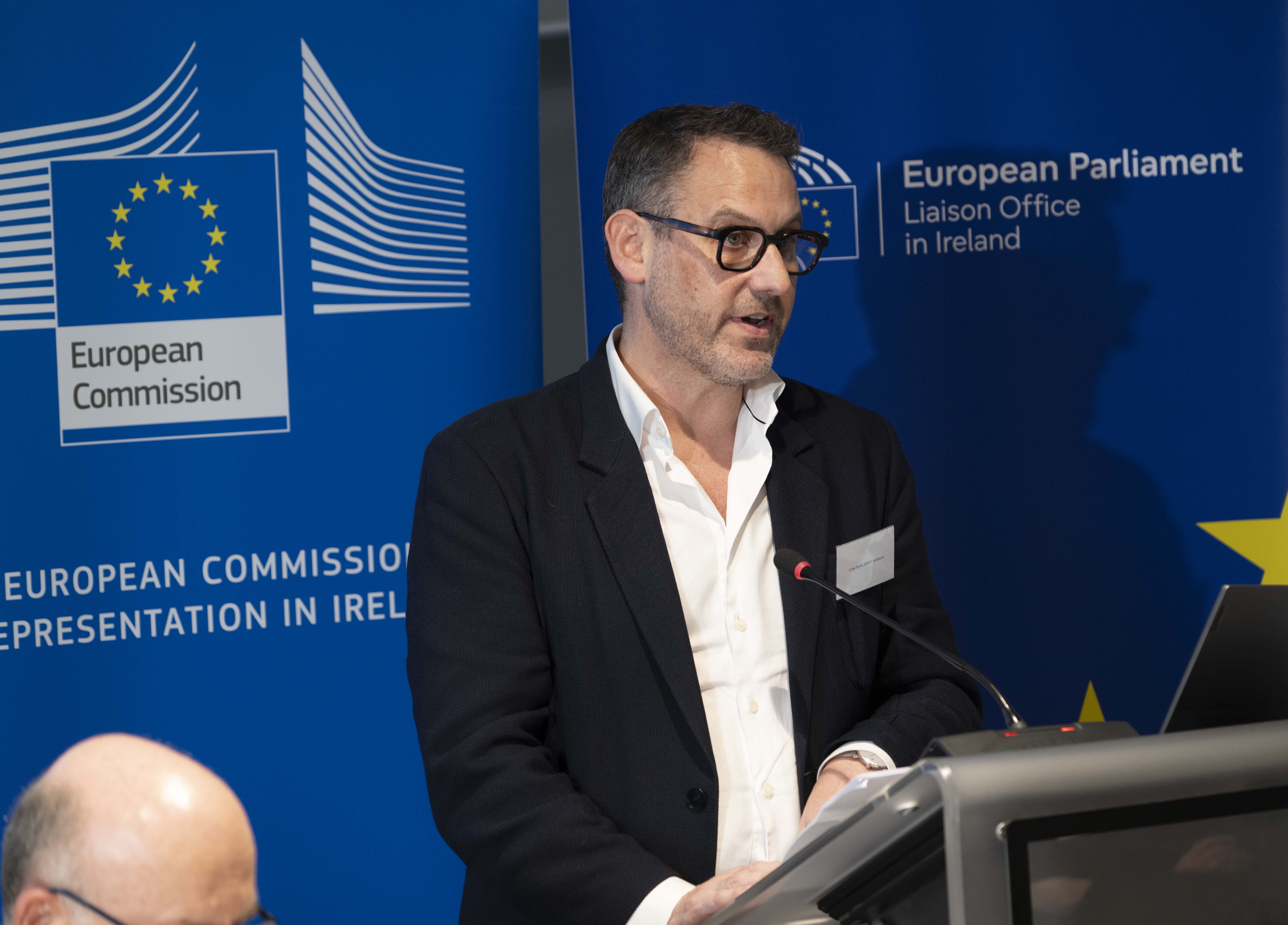
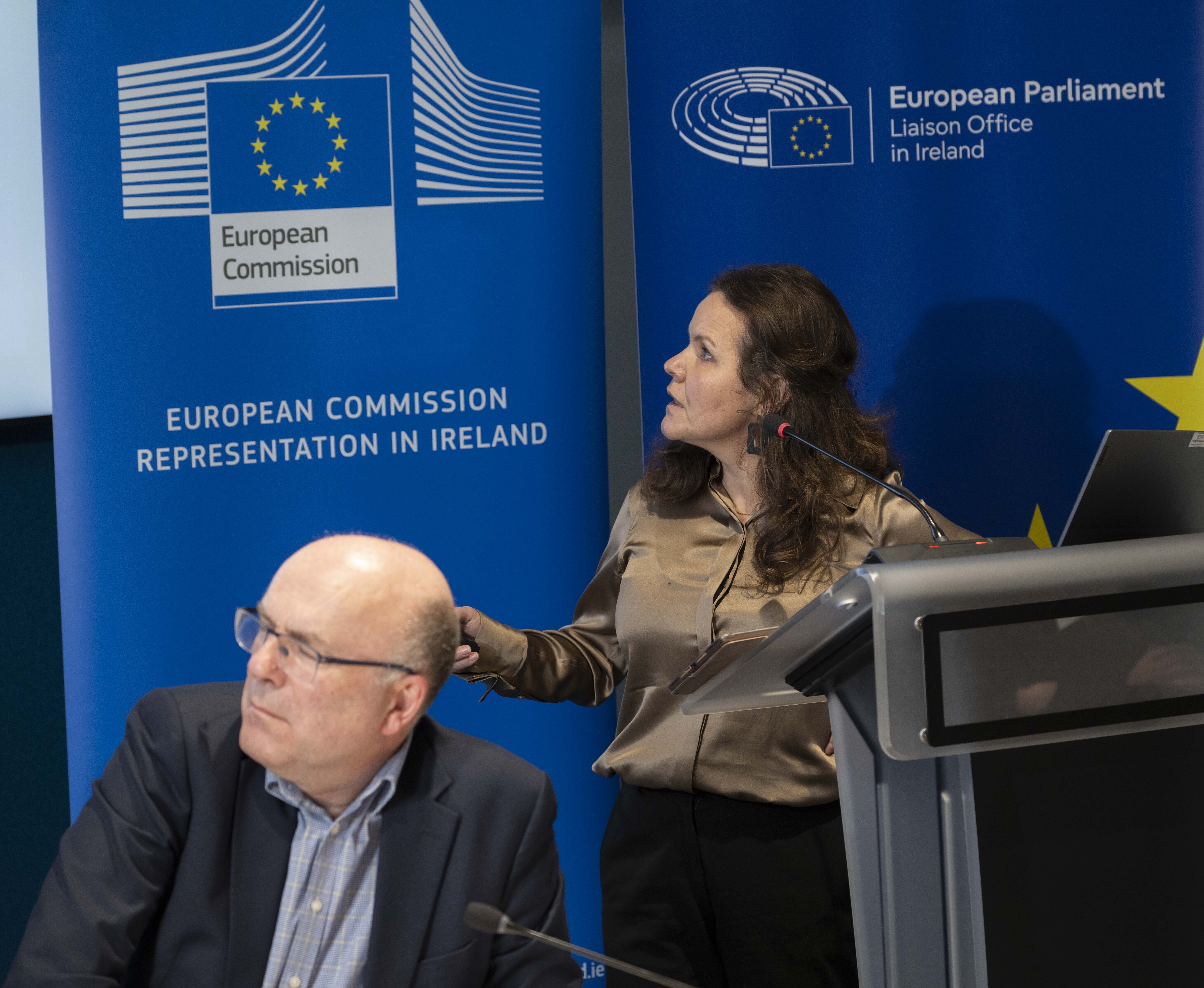
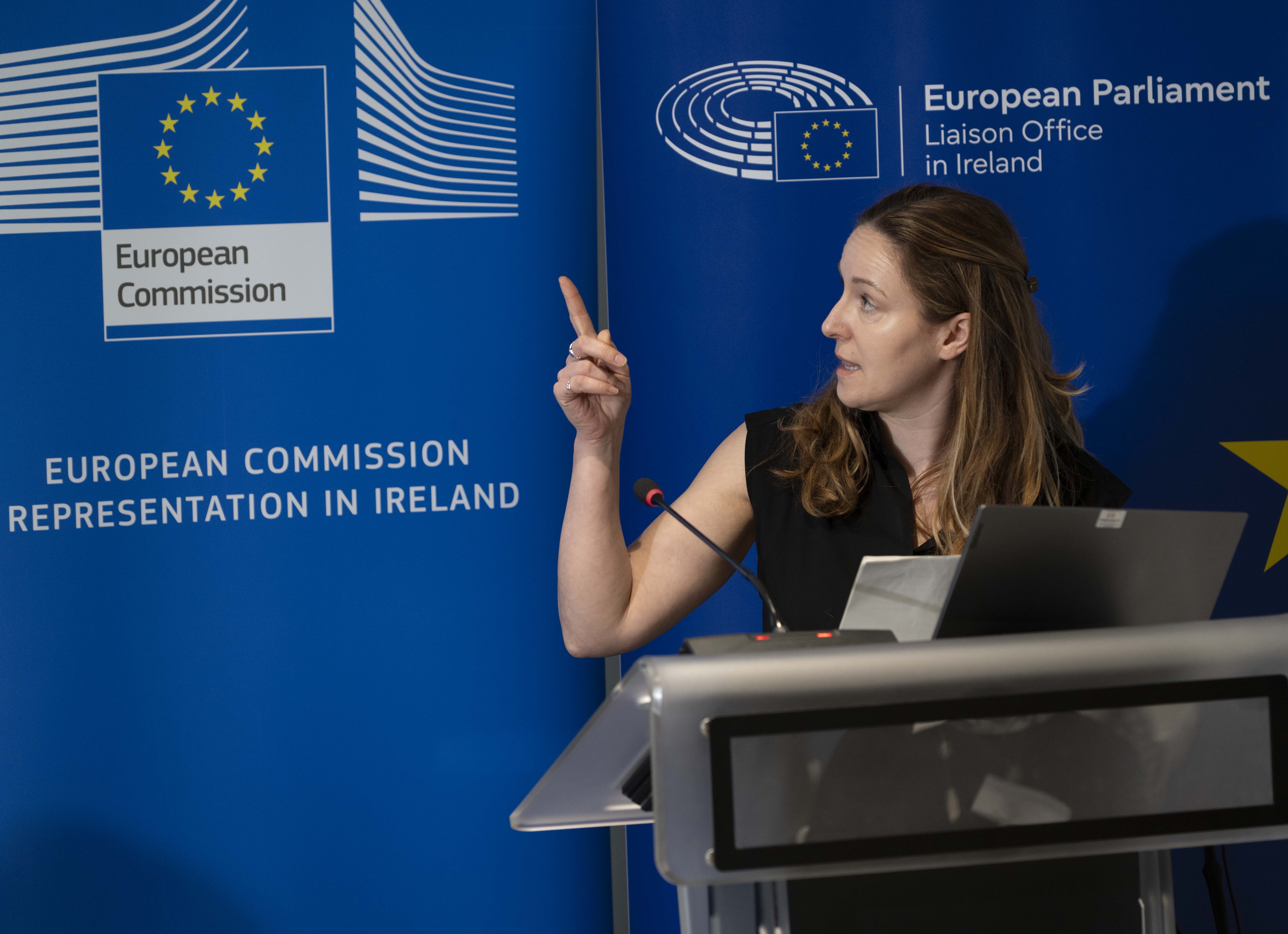
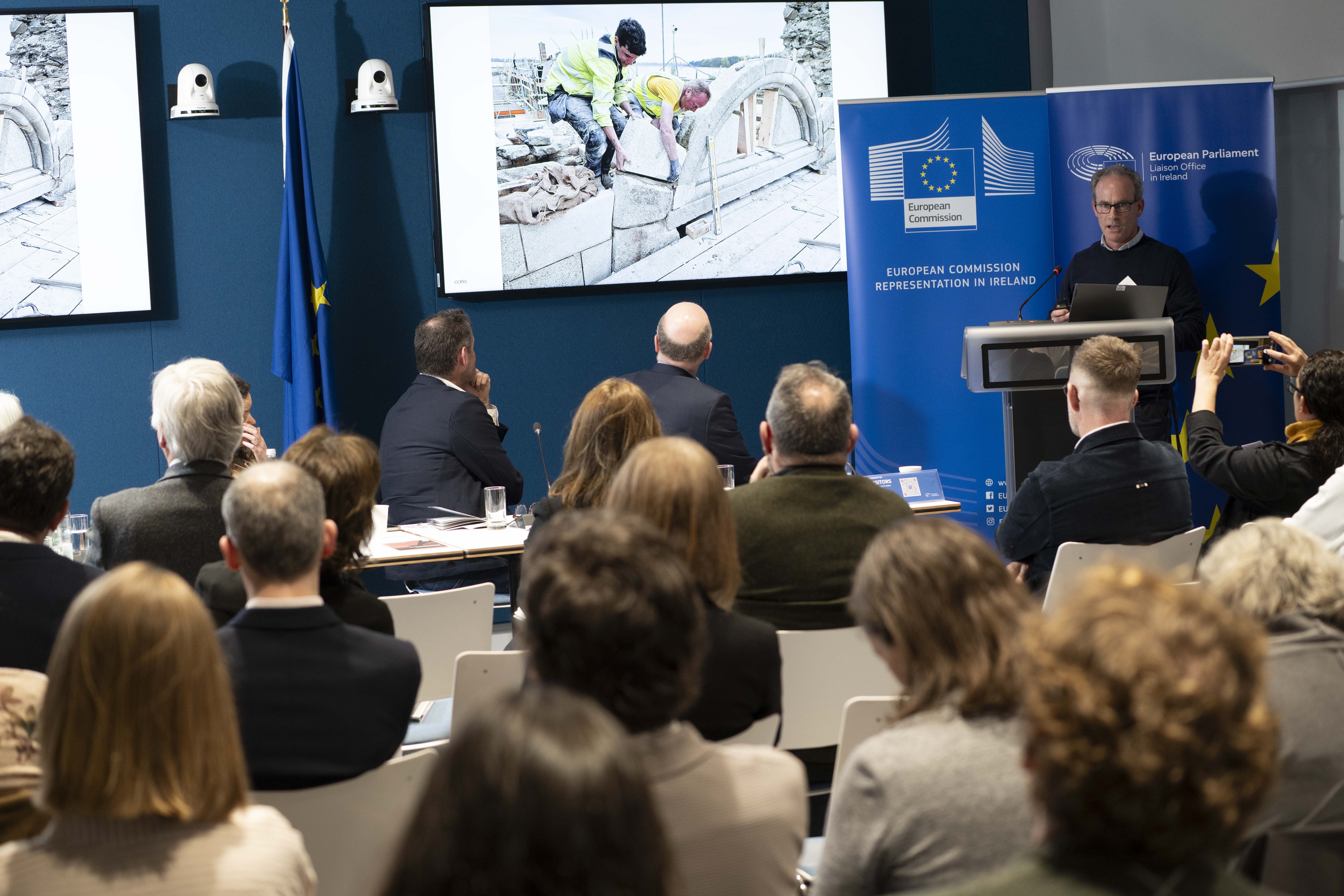
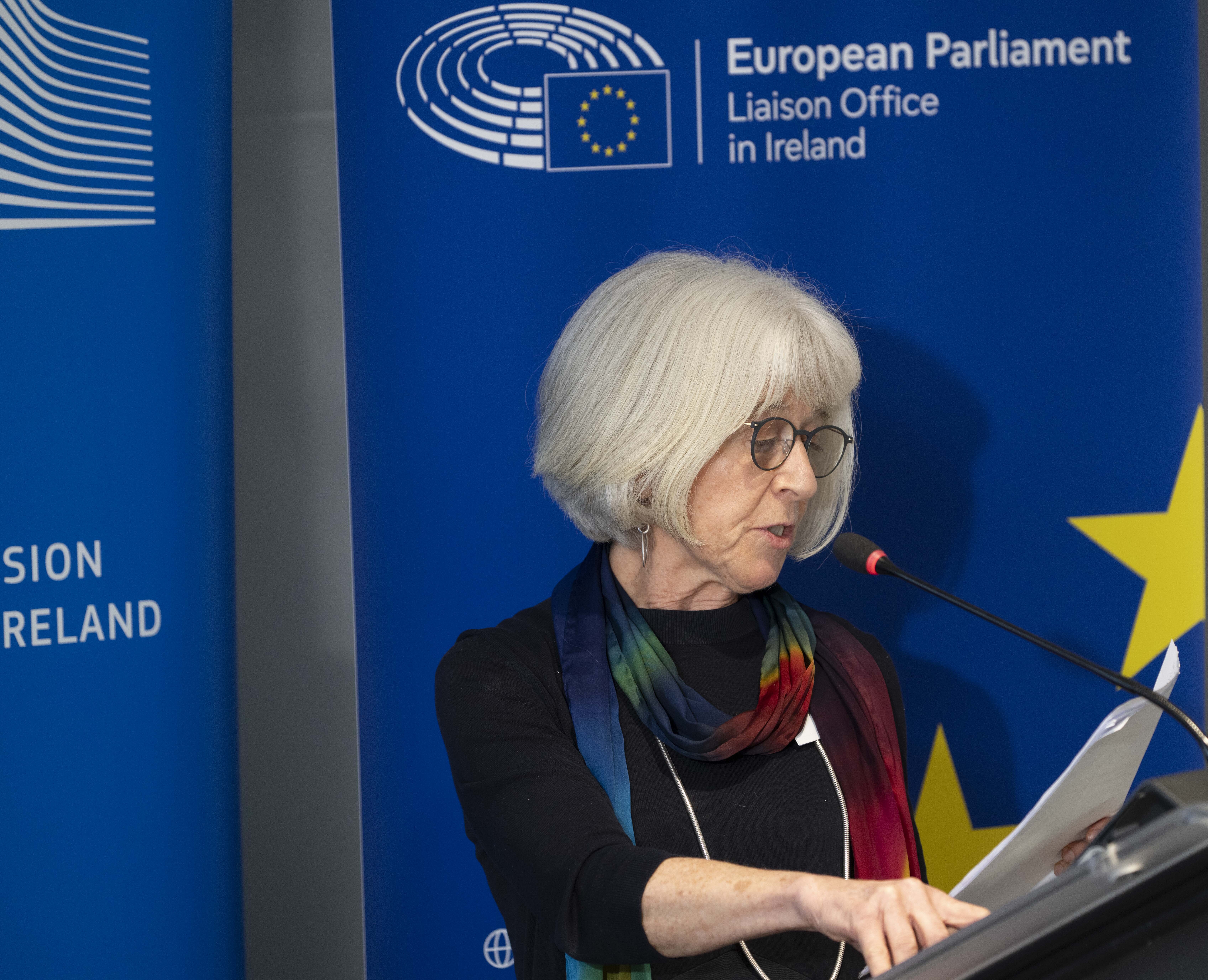
Peter Power, Head of the European Commission Representation in Ireland making opening welcome addressGraham Bell delivering his introductory paper, 'Baukultur: an integration approach to European heritage assests as part of Session 2 (Culture)Elena Montani, Head of Unit, New European Bauhaus Unit, Joint Research Centre (JRC) at the European Commission delivering the introductory presentation on the NEB for Session 4 (Quality)Andree Dargan, County Architect for Dun Laoghaire Rathdown County Council delivering a presentation on the ERDF THRIVE in Ireland funded Kelly's Hotel and Wash House Grainne Shaffrey, Director of Shaffrey Architects delivering a presentation on the West Gate House, Drogheda Dr Claudio Gulli, Director of the Palazzo Butera delivering his keynote paper, Palazzo Butera: a project for Palermo and EuropeJoe Lawrence, Director, Lawrence and Long Architects delivering his presentation on Fenian Street: a house for musiciansNiamh Lunny CEO Irish Landmark Trust delivering her presentation on the conservation and restoration of the ILT's Goggins Cottage and Saunders Court.Ciaran O'Brien, Director of OBFA delivering the keynote paper in Session 3 (Sustainability) where he presented on two adaptive reuse projects Portlaoise Convent and Haulbowline Block 9. Emmett Scanlon, Director, Irish Architecture Foundation delivering an introductory paper in Session 3 (Sustainability)Graham Hickey, CEO Dublin Civic Trust chairing Session 3 (Sustainability) where he delivered a short presentation on the Europa Nostra award winner DCT HQ, 18 Ormond Quay Upper and the current works at 68 Arran Street East, Dublin 1.Sarah Woods, Assistant Principal Architect, OPW, delivering her presentation on the redevelopment of the National Concert Hall, DublinGerard Carty, Director at Grafton Architects delevering his presentation on the Crawford Art Gallery, CorkValerie Mulvin, Director at McCullough Mulvin Architects delivering her presentation on the Central Hotel, Dublin.Michiel Riedijk, founding partner and principal architect, Neutelings Riedijk Architecten delivering his keynote paper, Gare Maritime and other projects of transformation, re-imagining existing buildings and places with high quality interventions and materials, distinguishable from the orginal construction.Graham Bell, board member of Europa Nostra delivering his presentation 'Baukultur: an integrated approach to European heritage assestsFionnuala Sweeney, Head of Film and Architecture at the Arts Council chairing Session 2 (Culture) with panellists Valerie Mulvin, Gerard Carty, Sarah Woods, Michiel RiedijkDonough Cahill Chairing Session I Leadership with speakers Morris Conway, Lar Joye, Niamh Kiernan and Olof MartinssonLar Joye, Port Heritage Director, Dublin Port Company delivering his presentation on the rehabilitation and reuse of the port's heritage structuresNiamh Kiernan, Architectural Conservation Officer, Dublin City Council delivering her presentation on five examplars of the adaptation of historic buildings within the cityMorris Conway, Senior Architect with Waterford City and County Council delivering his presentation on the urban regeneration of the Georgian coreJacqueline Hall, Chair of the Irish Georgian Foundation delivering the opening addressNicola Matthews, Senior Architect, NBHS, Department of Housing, Local Government and Heritage delivering her paper on the New European BauhausOlof Martinsson, Heritage Officer for Malmo (Stadsantikvarie) delivering the keynote address for Session I (Leadership) with his paper, 'Historic Places and Spaces under Transformation - Varvsstaden'Colm Doyle, Director at DMVF Architects presenting on the former Belfast Bank, Rathmines, Dublin 6Lisa McVeigh, Director at DMVF presenting on the restoration of 30 Parnell Square, Dublin 1. Audrey Farrell, Senior Architect, OPW presenting on the stablisation and repair works to the Magazine Fort, Phoenix ParkShane Nolan, Director, Nolans Group Conservation & Restoration presenting on traditional skills at the OPW's Magazine Fort, Phoeix ParkFionnuala Hayes, Director at Howley Hayes Cooney Architects presenting on St. Patrick's Cathedral Deanery mews restoration Michael Horan, AXO Architects presenting on Strokestown Park House and National Famine Museum & Kylemore AbbeyCharlotte Sheridan making the concluding remarks at the conferene
2026 IGS Architectural Conservation & Original Drawing Awards is Now Open to Applicants
26.03.2026
Posted by IGS
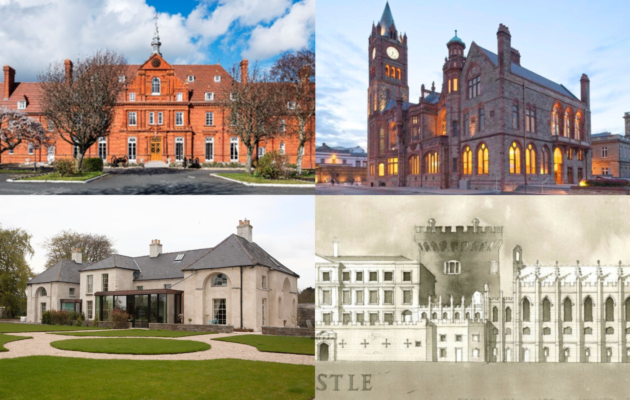
The Irish Georgian Society invites applications for its 2026 Architectural and Original Drawing Awards from all Irish architects and architectural practices, building surveyors, contractors, engineers, and other professionals involved in the conservation of historic buildings on the island of Ireland. The mission of the Awards is to encourage excellence in conservation and to celebrate those conservation professionals and practitioners responsible for projects of merit.
There will be two award categories: one for a conservation project and one for an original drawing (non-CAD) relating to an historic building or structure.
Applications concerning historic buildings of all types, including vernacular, are welcome. Previously shortlisted projects have included churches, civic structures, courtyards, and houses both urban and rural. Applications must be received by 12 noon on Thursday 30th April 2026
This year's awards are generously sponsored by Ecclesiastical Ireland with additional funding provided by the IGS London Chapter and the Department of Housing, Local Government and Heritage through the National Built Heritage Service.
For more information about the awards and to access the application form and instructions click here.